
A new species of sea spider, Tanystylum kiixin, has been discovered.Credit: Cormac Toler-Scott
Amid wars, AI doom and a super El Niño, good news can seem in short supply. But it is there if you go looking. In Nature’s latest collection of stories selected to bring readers joy, learn about a country that has reversed its rates of diabetes and umbrella that keep corals cool.
But first, you might have heard about reports of the first new wild cat species in a century, announced last month1. The spotted feline, called Leopardus tilcayo, was found in the forested Yungas region of Bolivia.
The news is not all bad: five inspiring science stories to lift your mood
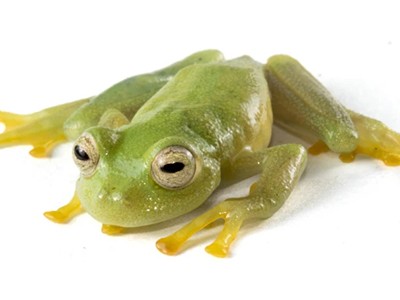
But did you know that a new member has also been inducted into the penguin family this year? A population of penguins on the remote Kerguelen Islands — around 2,000 kilometres north of Antarctica in the Indian Ocean — has been designated as a new species, the southeastern gentoo (Pygoscelis kerguelensis)2. This addresses a long-running debate about whether the gentoo penguin (Pygoscelis papua) is one species or several. Using genetic analysis, scientists say the southeastern gentoo is its own species and that three populations previously identified as subspecies of gentoo should also be considered their own species.
Meanwhile, two new species of sea spider3 have been found in the Salish Sea, off the west coast of the United States and Canada. Sea spiders are a type of marine arthropod related to horseshoe crabs and arachnids. One of the new species, Callipallene pilosuspedes, has four bright red eyes, legs three times as long as its body, a triangular mouth and a short proboscis with claws it uses to grab food. It also uses spiny appendages at the bottom of its head, called ovigers, to groom itself. The other species, called Tanystylum kiixin, has stubby legs, an hourglass-shaped body and black eyes.
Diabetes rates go down
Mauritius has become the first country in the world to reduce its number of people with type 2 diabetes4. Researchers say this is impressive, given that rates of the disease are rising globally.
The island nation off the east coast of Africa has been surveying how many people have type 2 diabetes or raised blood sugar levels — an indicator of being at risk of developing diabetes — since 1987. The number of people with the condition went up between 1987 and 2009, but had decreased by 11% for men and 16% for women by 2021. Rates of raised blood sugar also decreased by roughly one-third between 2009 and 2021.
The trend is striking, write Shukri Mohamed and Andre Pascal, at the African Population and Health Research Center in Nairobi, in a commentary5 accompanying the study in The Lancet Diabetes and Endocrinology. It is probably the result of improved awareness of diabetes, they say, as well as better screening and access to health care.
Umbrellas for coral
Improvised umbrellas made from cloth resistant to ultraviolet light protected a small section of coral reef in the Florida Keys from heat stress during extreme temperatures in 20246. Scientists made umbrella-like canopies using PVC pipes, filled with spray foam, and shade cloth; the structures floated about 30 centimetres above the coral.

Researchers assemble a shade covering over coral in the Florida Keys.Credit: Arelys Chaparro
This shading reduced the amount of solar radiation the coral was exposed to, minimizing the heat stress that often causes coral bleaching by killing tiny, coloured organisms that live inside the coral. Nearby unshaded corals, by comparison, continued to get paler over time. The research team says that similar shades could be a cheap, effective way to protect coral against heat stress.