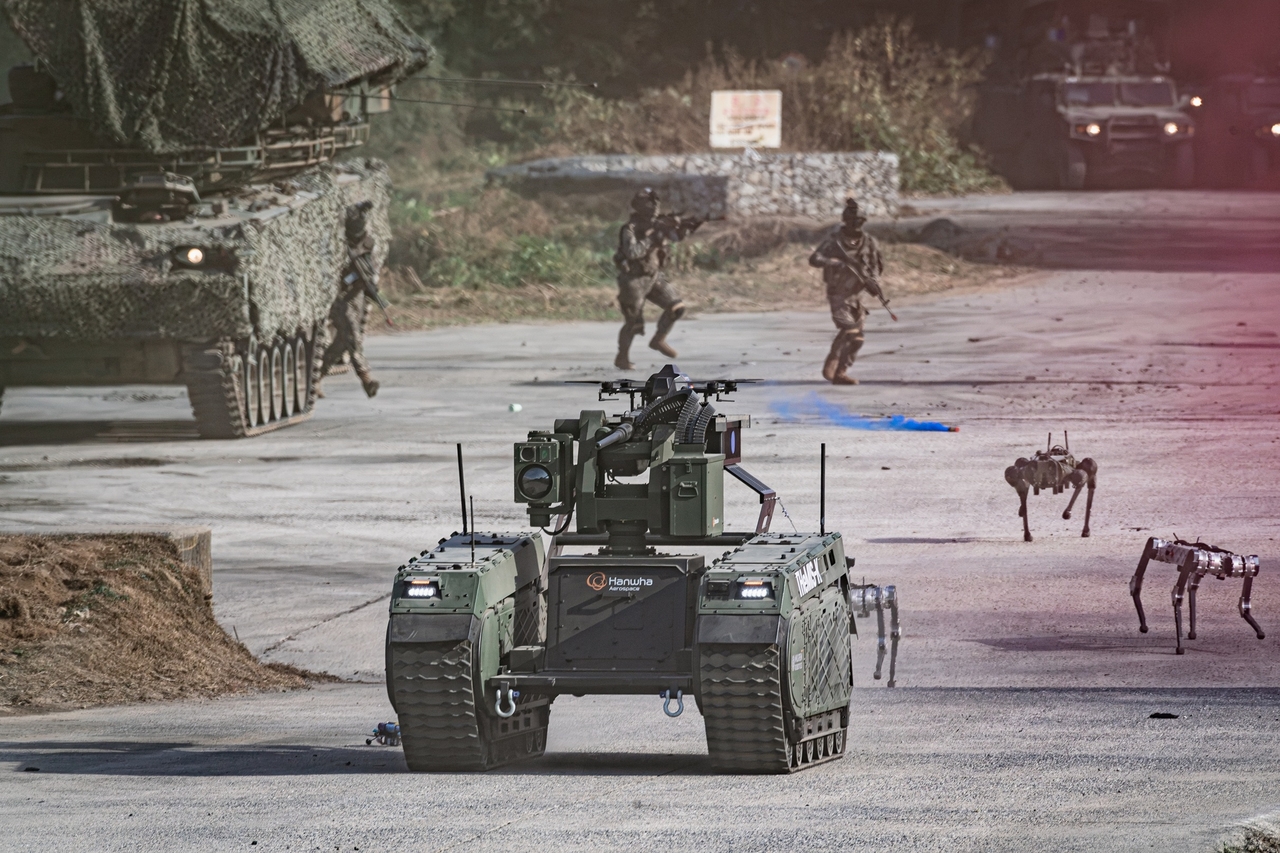
YANGPYEONG, Gyeonggi Province — South Korea's Army envisions a battlefield where drones and robots find threats, breach dangerous areas and absorb risks before soldiers move in.
That vision — part of a broader push to transform a manpower-heavy force into an AI-enabled manned-unmanned force by 2040 — was on display Wednesday at a training ground in Yangpyeong, Gyeonggi Province. The Army staged an integrated future warfare exercise under its Army TIGER+ initiative, combining artificial intelligence, robots and uncrewed systems with existing combat assets.
Army TIGER+ is an expanded modernization effort aimed at transforming the service into a manned-unmanned force as advances in AI and robotics reshape warfare and South Korea faces a shrinking pool of military personnel.
Wednesday's exercise was divided into three phases: drone and counter-drone warfare, integrated uncrewed combat, and manned-unmanned combat.
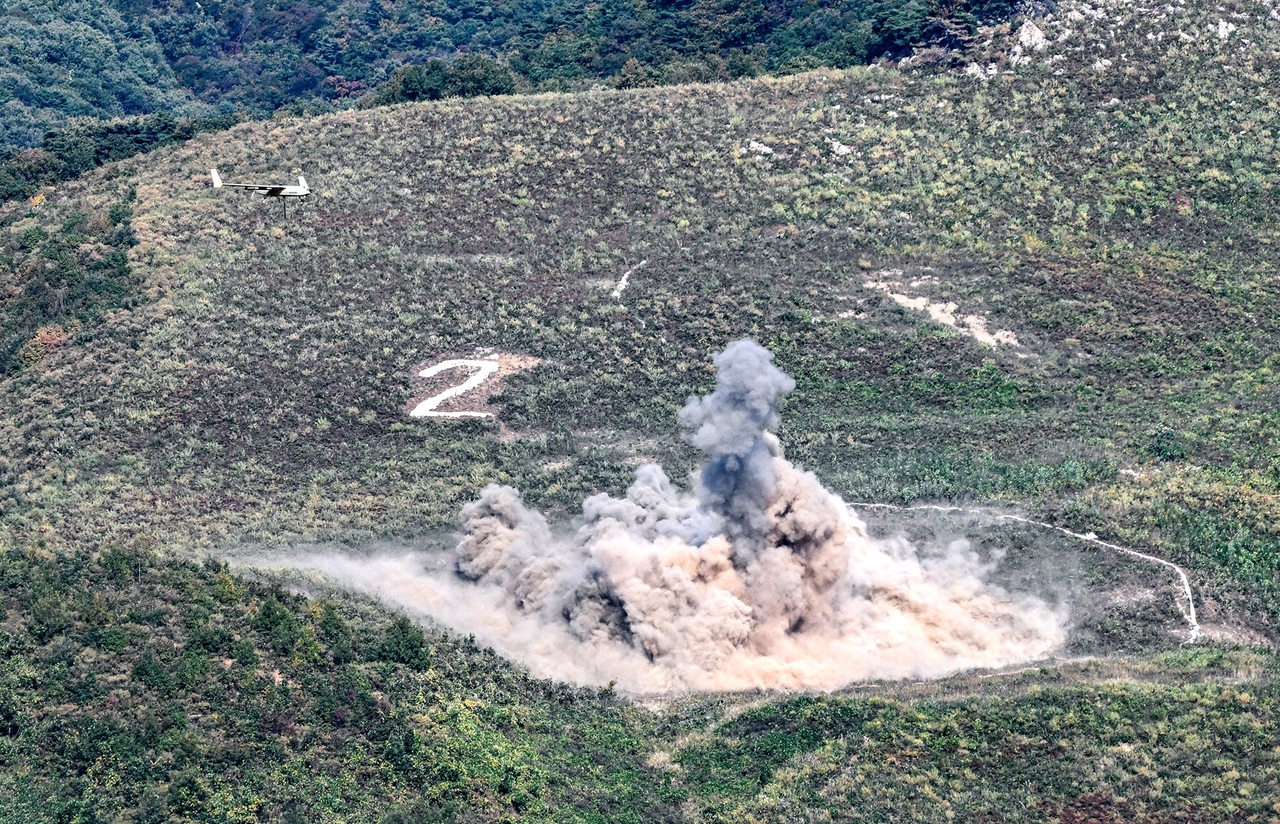
In the first phase, hostile drones were detected and identified from a distance before an AI-based decision-support system was used to assess the threat. Counter-drone systems, including a laser air defense weapon and interceptor drones, were then used to neutralize them.
The focus then shifted to using uncrewed systems at the front of an advance.
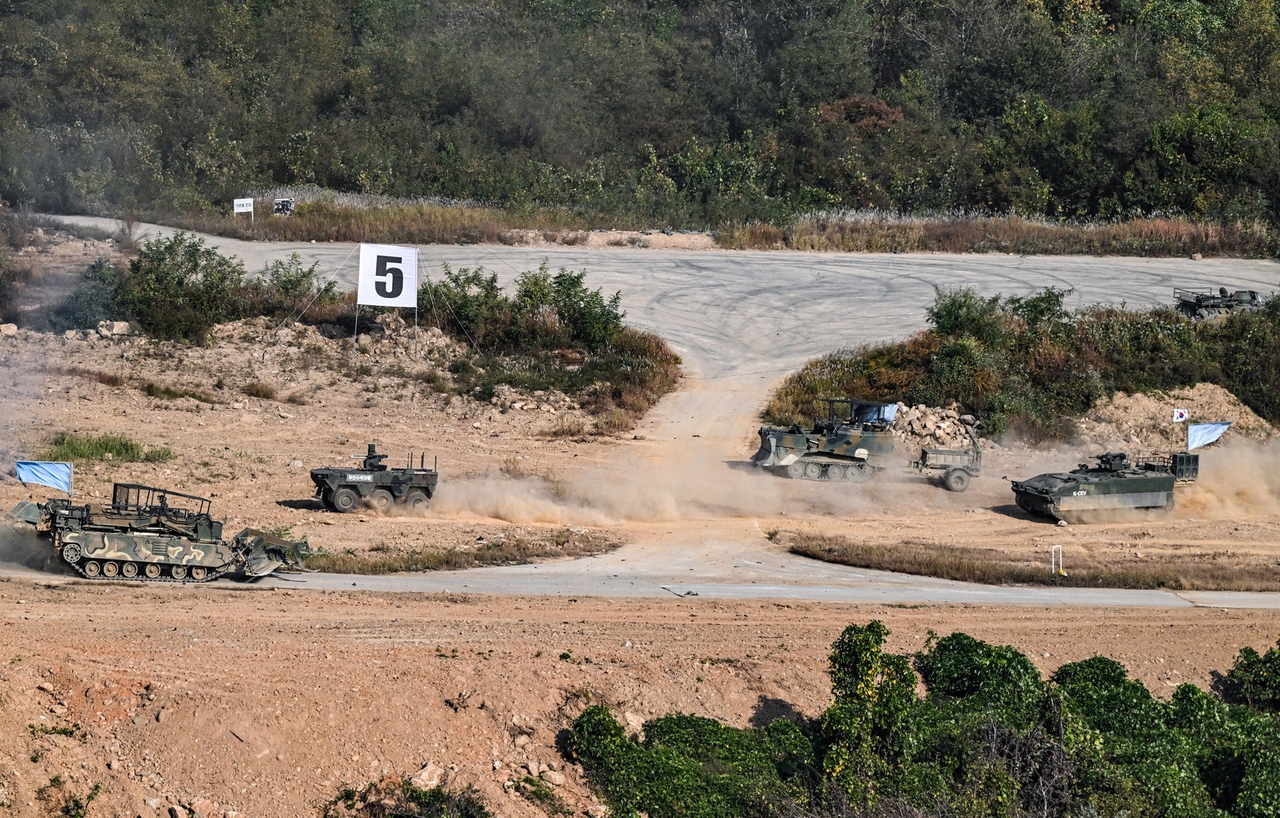
Smoke-screen drones and multipurpose uncrewed vehicles were deployed ahead of troops to search for threats and help overcome a drone "kill zone." In the manned-unmanned combat phase, uncrewed reconnaissance vehicles and K-CEV Korean combat engineering vehicles moved through obstacles and hazardous areas before crewed forces followed to secure their objectives.
The Army said the approach is intended to reduce soldiers' exposure to danger while improving combat efficiency and survivability.
Army Chief of Staff Gen. Kim Gyu-ha said the envisioned transformation would also require support from inside and outside the military.
"The transformation toward the Army of 2040 must be backed by the confidence and participation of Army personnel, as well as the understanding and support of the public," Kim said.
Under Army TIGER+, the service has already established an integrated uncrewed combat unit and a manned-unmanned squad to test how soldiers, drones and robots can operate together.
The integrated uncrewed combat unit, launched in January, is organized into six elements covering drones and counter-drone operations, robots, cyber and electromagnetic activities, networks, and support. The manned-unmanned squad was established in July to test the concept at the squad level.
The Army is also developing what it calls a "digital backbone," a concept aimed at connecting drones, robots, sensors and AI-based command decision-support systems through a common network, starting with smaller units before expanding to larger formations.
Another part of the initiative is what the Army calls "Transformation in Contact," or TiC, under which emerging technologies and combat concepts are tested in military operating environments and refined based on the results, rather than introduced only after development is complete.
The Army plans to expand Army TIGER+ testbed units into 14 types and link an AI transformation hub in Pangyo with training grounds in Yangpyeong and Mugeon-ri, using data collected during operations to train AI systems and improve technologies.
Wednesday's event featured 85 advanced systems, including equipment being tested through government and private-sector projects and prototypes intended for possible military deployment.
"We will accelerate the transition toward future manned-unmanned forces centered on Army TIGER+ by connecting civilian innovation with the military's operational requirements and utilizing defense robotics and physical AI," Maj. Gen. Lee Kyung-jin, head of the Army Headquarters' policy office, said.
flylikekite@heraldcorp.com