SK, Samsung, Hyundai and Doosan weigh multitrillion-won investment to tap US nuclear boom, despite no guarantee of reactor contracts
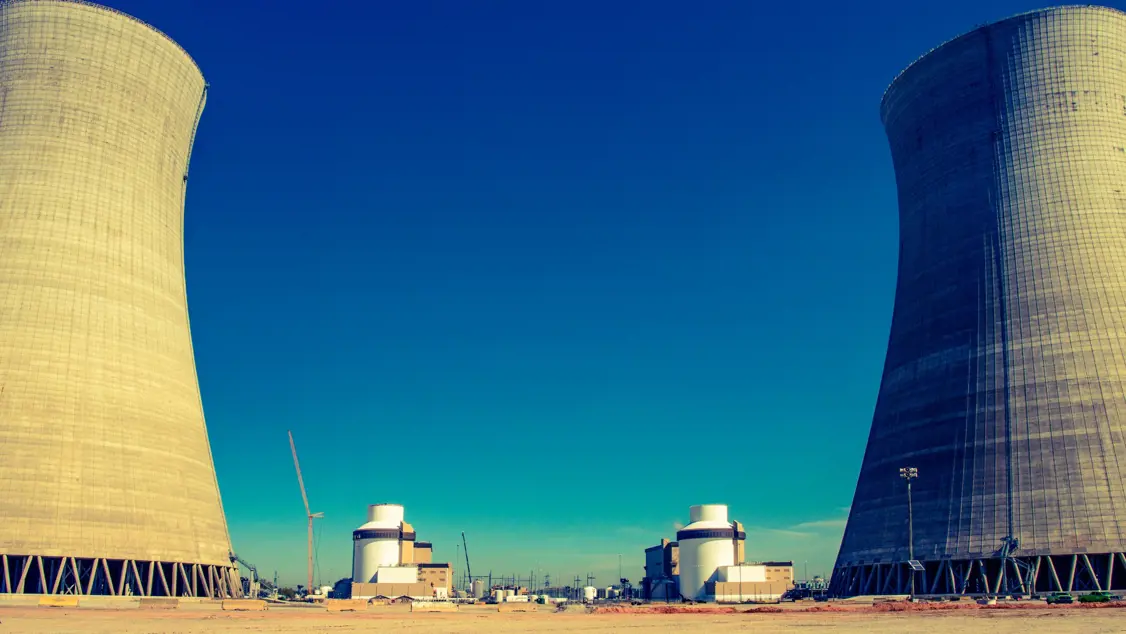
South Korea's leading conglomerates are considering a multitrillion-won investment in US nuclear power company Westinghouse Electric, in a move that could give Korean businesses a stronger foothold in America's expanding nuclear energy market.
But the proposed investment raises a central question: Will buying a stake in Westinghouse translate into construction and equipment contracts for Korean companies?
SK Group, Samsung C&T, Hyundai Engineering & Construction and Doosan Enerbility are reviewing plans to form a strategic investor consortium, with SK expected to contribute the largest share, according to industry sources.
The companies said they were considering various options but had made no final decisions.
The discussions follow a broader investment agreement between Seoul and Washington that could channel up to $120 billion of a planned $200 billion US investment fund into eight large nuclear reactors in the United States.
The agreement also gives a South Korean public-private consortium the option to acquire a 5-10 percent stake in Westinghouse at a 10 percent discount to its offering price if the company goes public.
Why are Korean companies interested?
The proposed reactor projects offer potential business opportunities across the nuclear supply chain.
Of the eight reactors, six are expected to use Westinghouse's AP1000 design, while two would use Korea's APR1400 technology. The latter would mark the first deployment of Korean-designed reactors in the US.
Samsung C&T and Hyundai E&C could pursue engineering, procurement and construction contracts, while Doosan Enerbility could supply major components such as reactor vessels and steam generators.
SK's interest reflects a broader push into nuclear energy as electricity demand rises alongside the expansion of artificial intelligence data centers.
In 2022, SK Inc. and SK Innovation invested a combined $250 million in TerraPower, the US small modular reactor developer chaired by Microsoft co-founder Bill Gates. SK Innovation also signed a preliminary agreement with TerraPower in August to jointly pursue SMR projects.
A stake in Westinghouse would give SK exposure to large-scale nuclear generation alongside its existing SMR investments.
"Whether in building AP1000 or APR1400 reactors, Korean companies would need to participate," a government official said. "Each company will make its investment decision based on its own commercial interest."
How much would the investment cost?
Investment bankers estimate Westinghouse could be valued as high as $30 billion in a potential initial public offering.
At that valuation, a 10 percent stake would cost approximately $2.7 billion after the agreed 10 percent discount.
That would be a substantial commitment even for Korea's largest industrial groups.
Industry Minister Kim Jung-kwan recently said Korea Electric Power Corp. and its nuclear power subsidiary Korea Hydro & Nuclear Power would make only limited, largely symbolic investments because of their heavy debt burdens.
Private companies seeking commercial opportunities from the US nuclear expansion would therefore be expected to provide most of the funding.
Kim also emphasized that negotiations were not yet finalized.
Would a stake guarantee nuclear contracts?
Equity ownership would not automatically entitle Korean companies to participate in Westinghouse projects, leaving uncertainty over how quickly the investment could generate commercial returns.
But proponents argue that becoming a shareholder could strengthen Korean companies' negotiating position and help them secure a more lasting role in the global nuclear supply chain.
Choi Sung-min, a professor of nuclear and quantum engineering at KAIST, said an equity investment could give Korean companies greater leverage to revisit their settlement and other agreements with Westinghouse in future negotiations.
"Korean companies are attractive partners for Westinghouse, but there is no guarantee that it will work exclusively with them," Choi said.
"As the global nuclear market expands, Westinghouse will play a major role, so building a closer partnership and securing a stake early could be strategically important for Korean companies."
Why does the US market matter now?
The investment discussions come as Washington seeks a major expansion of nuclear power capacity to meet rising electricity demand, particularly from AI data centers.
In a May 2025 executive order, US President Donald Trump set a target of quadrupling the country's nuclear generating capacity from roughly 100 gigawatts to 400 GW by 2050.
The proposed 300-GW increase would be equivalent to the capacity of approximately 210 Korean-designed APR1400 reactors, each rated at 1.4 GW.
For Korean companies, the opportunity extends beyond the initial eight-reactor plan. A deeper relationship with Westinghouse could open doors to future nuclear projects in the US and other markets.
The immediate challenge, however, is determining whether the potential long-term benefits justify a multitrillion-won investment without guaranteed orders.
herim@heraldcorp.com