Former GM factory in Pune transformed into high-tech production hub with automated welding, AI-powered inspections and plans to nearly double capacity
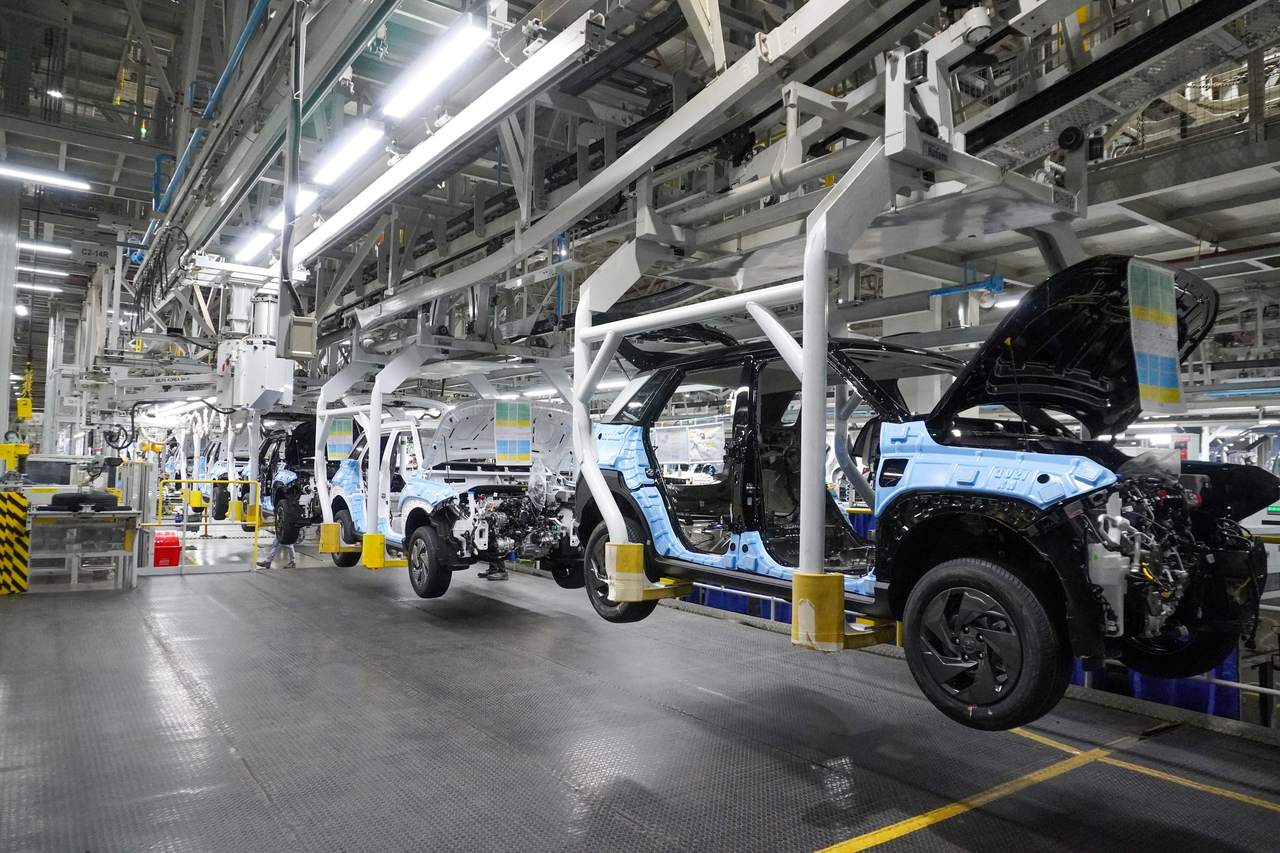
PUNE, India — Yellow robotic arms swing, twist and weld steel car bodies in synchronized movements at Hyundai Motor's new plant in Pune, western India. Nearby, laser scanners sweep across doors and hoods, checking for defects with precision beyond the human eye.
The factory floor is a striking departure from what stood here just a few years ago.
When General Motors shut down the facility in 2020 and exited India, it left behind a largely manual assembly plant with just six welding robots. The site remained idle until Hyundai acquired it in 2023 and began an extensive overhaul.
Today, 204 robotic arms handle the welding of vehicle bodies, turning the former GM factory into one of Hyundai's most advanced manufacturing sites in India.
"We kept only the outer pillars and the exterior shell. Everything else inside was ripped out and rebuilt from scratch," said Koo Ja-il, the senior engineer who oversaw the three-year transformation, during a media tour Wednesday.
"Over a year went into completely redesigning the layout. The physical machinery installation took just one and a half months, followed by intensive rounds of quality adjustments."
From six robots to 204
The biggest transformation is visible in the body shop, where 204 heavy-duty robotic arms supplied by Hyundai Wia, a group affiliate, weld the Venue compact SUV's steel frames without direct human intervention.
Overhead carriers transport 360-kilogram vehicle bodies between workstations, while robots capable of handling loads of 150 to 400 kilograms position and weld components with precision.
Workers still perform tasks such as loading smaller components and installing interior trim, but the vehicle's core structural welding is fully automated.
The upgrade is also designed to significantly increase output.
Under GM, the plant had an annual production capacity of about 130,000 vehicles, with an assembly line running at 21 vehicles per hour.
Hyundai has raised the initial line speed to 26 vehicles per hour, supporting an annual capacity of 170,000 units. The facility is designed to reach 44 vehicles per hour, with capacity scheduled to increase to 250,000 units by July 2028 and 320,000 by 2030.
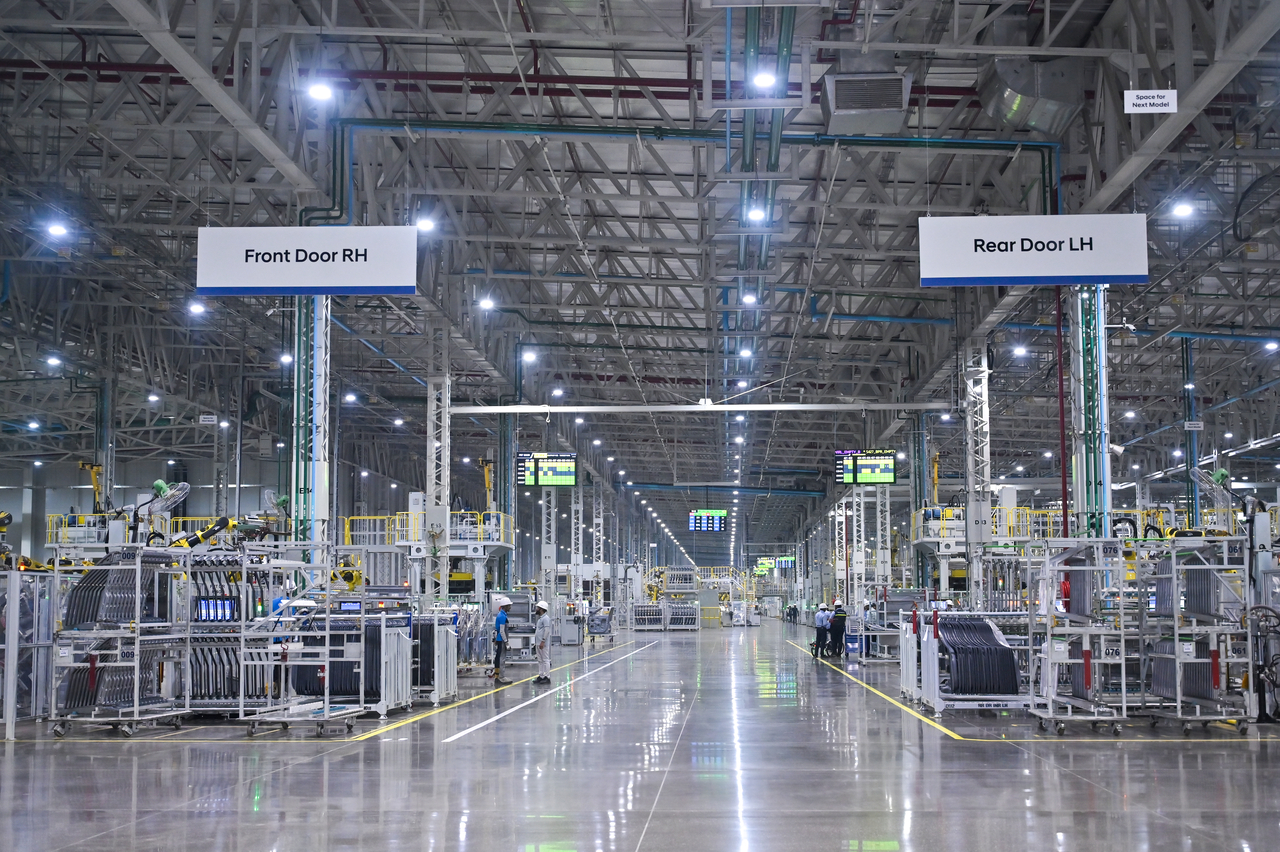
The factory's unusually wide spacing between structural pillars, expanded by GM shortly before its exit, has also given Hyundai room to redesign production lines for larger vehicles.
With 5.8-meter spacing between assembly stations, the line can accommodate models ranging from compact SUVs to vehicles as large as the Palisade.
Hyundai has also built flexibility into the body shop. Engineers can adjust the robots for different models by updating software coordinates and modular fixtures, reducing the need for costly physical retooling when production changes.
Metaplant-grade AI inspections
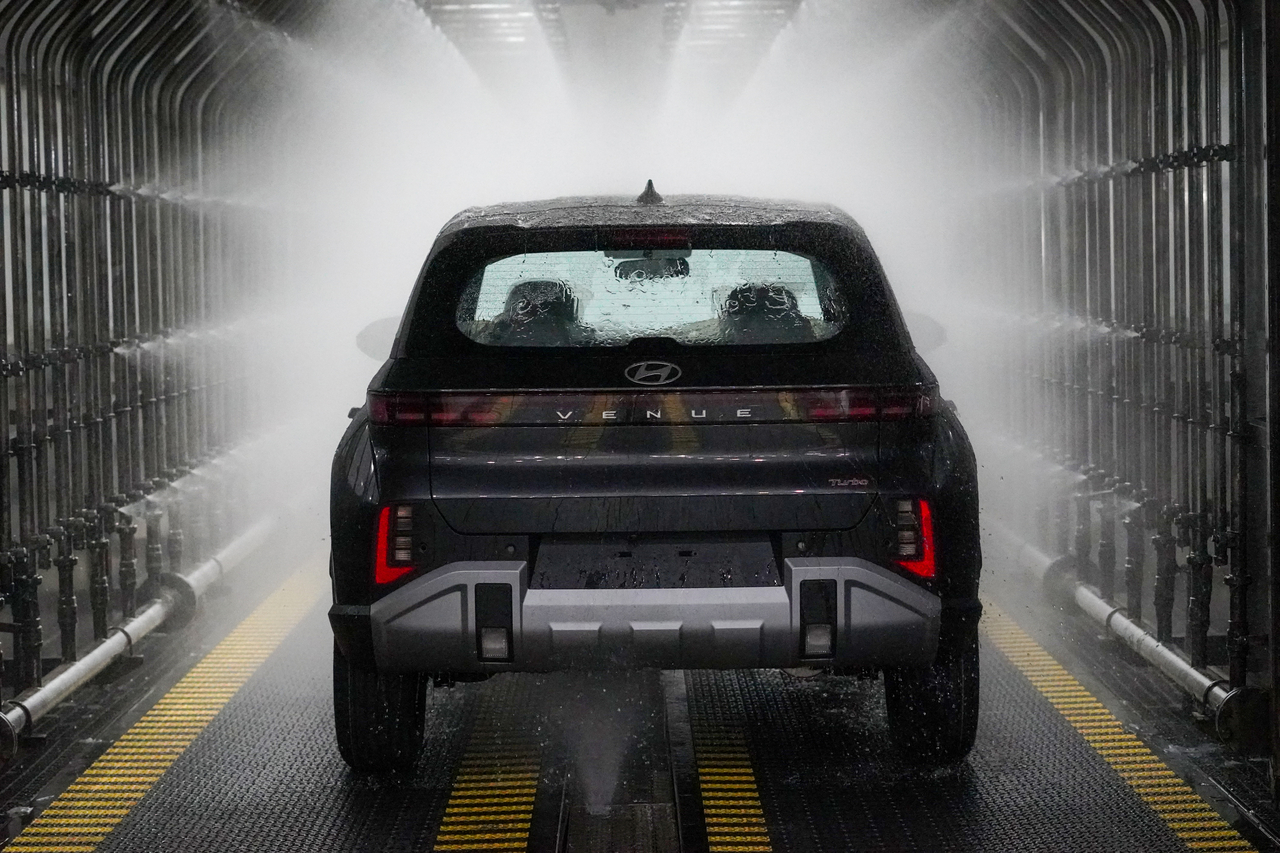
Beyond welding, Hyundai has introduced an advanced quality-control system similar to one deployed at its Metaplant America in Georgia.
In the inspection area, three completed vehicle bodies undergo full 3D laser scans each week. Every day, a vehicle is randomly selected for a four-hour audit using coordinate measuring machines, which examine 2,000 reference points with precision to one-thousandth of a millimeter.
The measurement data is fed back into the production system to identify deviations and guide adjustments on the assembly line.
"Ninety-seven percent of the cars we make fit our target measurements, leaving less than 3 percent with minor deviations," said Kyung In-koo, a senior quality inspection engineer.
"India is only the second market, after the Hyundai Motor Group Metaplant America, where we have deployed this simultaneous correction system," he added.
The same emphasis on automation extends to the stamping shop, where three large presses shape steel sheets into doors, hoods, roofs and other exterior panels.
Among them is a 5,400-metric-ton press of the same standard used at Hyundai's major production facilities in Ulsan, the Czech Republic and Slovakia. Steel coils are supplied by Posco and Hyundai Steel.
Here, artificial intelligence is used not only to detect manufacturing defects but also to protect workers.
Computer vision systems, supported by optical and thermal sensors, monitor the area around the heavy presses. The machinery can operate only when the system confirms that no workers are inside the restricted zone.
Each stamped panel receives a laser-etched QR code for tracking through production, while automated optical inspection equipment checks for fine cracks and other defects.
For Hyundai, the rebuilt Pune facility is more than an exercise in factory modernization. As the company expands its Indian production capacity, the plant is designed to deliver the flexibility, precision and quality standards of its global manufacturing network — at a site once abandoned by a rival automaker.
hyejin2@heraldcorp.com