Structured introductions offer alternative to dating apps and clubs, while language, distance remain challenges
Dating apps left Nicole feeling less like a potential partner than a possible English tutor.
“What I learned from using dating apps is that people will meet me because it’s cheaper to buy lunch than take an English class,” said Nicole, 37. “Being flirted with is a bonus for them.”
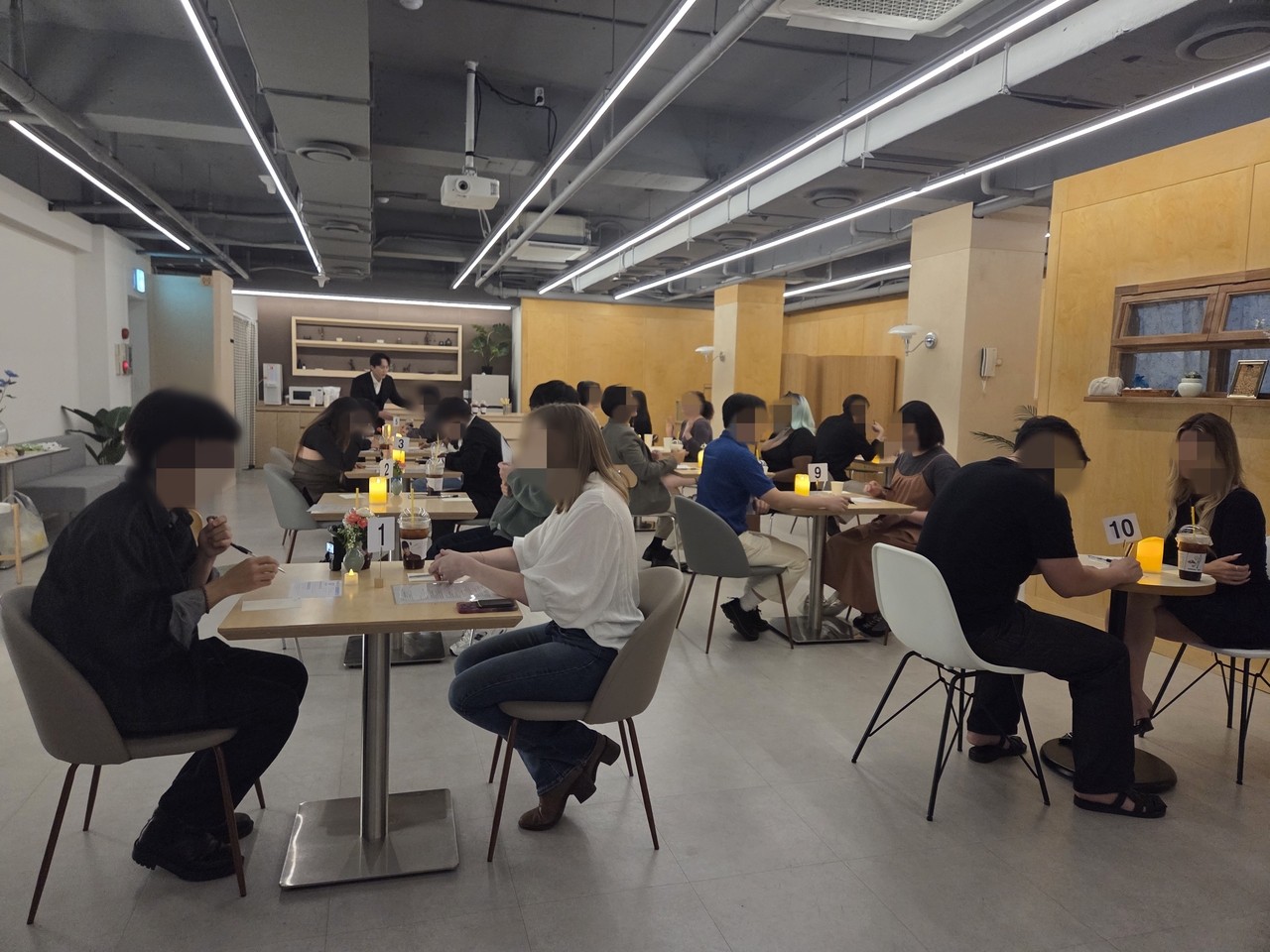
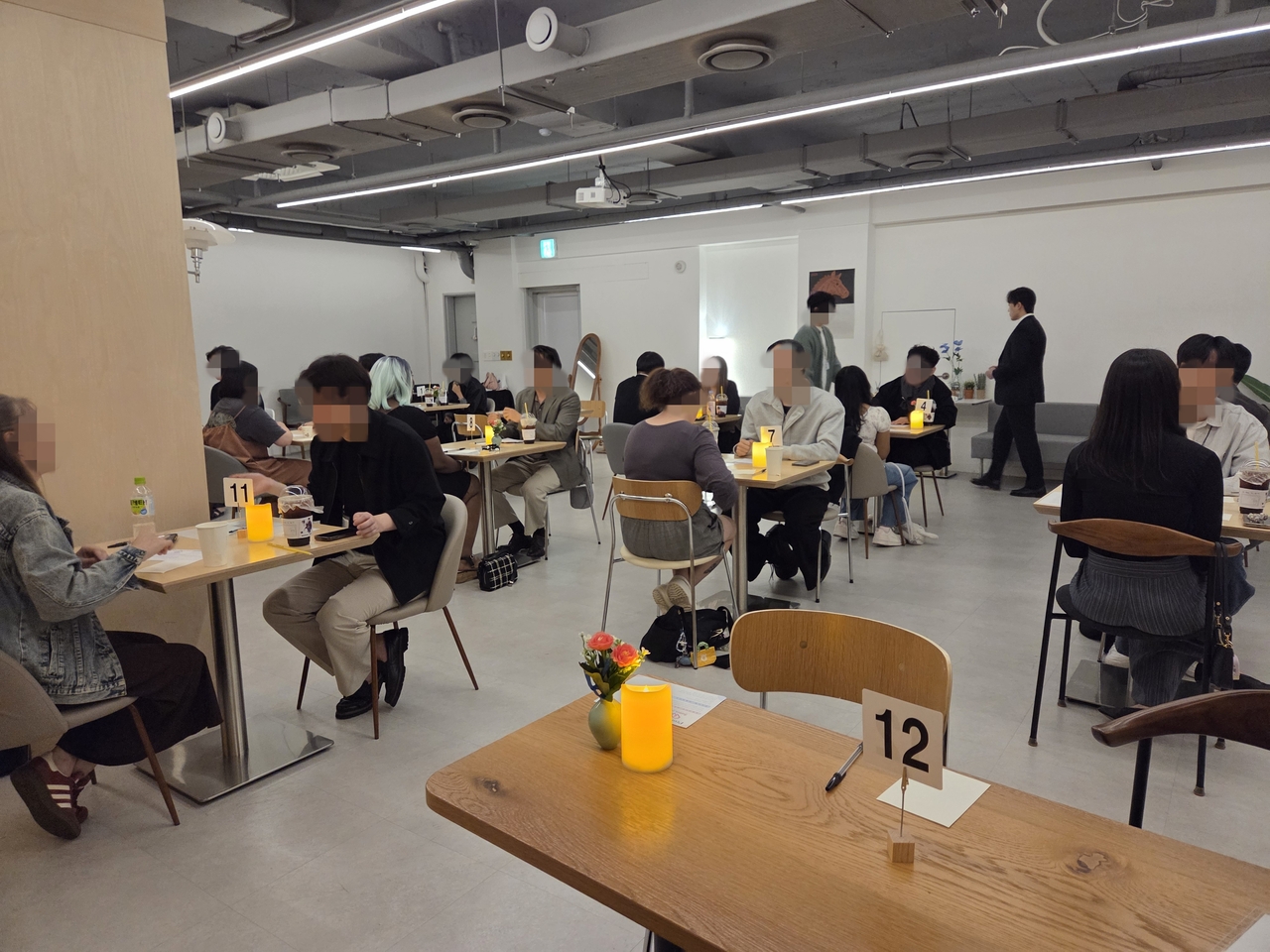
On Sunday, Nicole joined 10 other foreign women and 11 Korean men at a Seoul event organized by SoloLink. Participants met in pairs, switching partners every 10 minutes in a format known as “rotation sogaeting.”
The format adapts the traditional Korean practice of meeting a potential partner through a friend or acquaintance. Instead of a single introduction, participants meet several people in one sitting.
“I want to promote myself as someone more serious,” Nicole told The Korea Herald before the event. “I want to prove that I’m not just playing around on a dating app.”
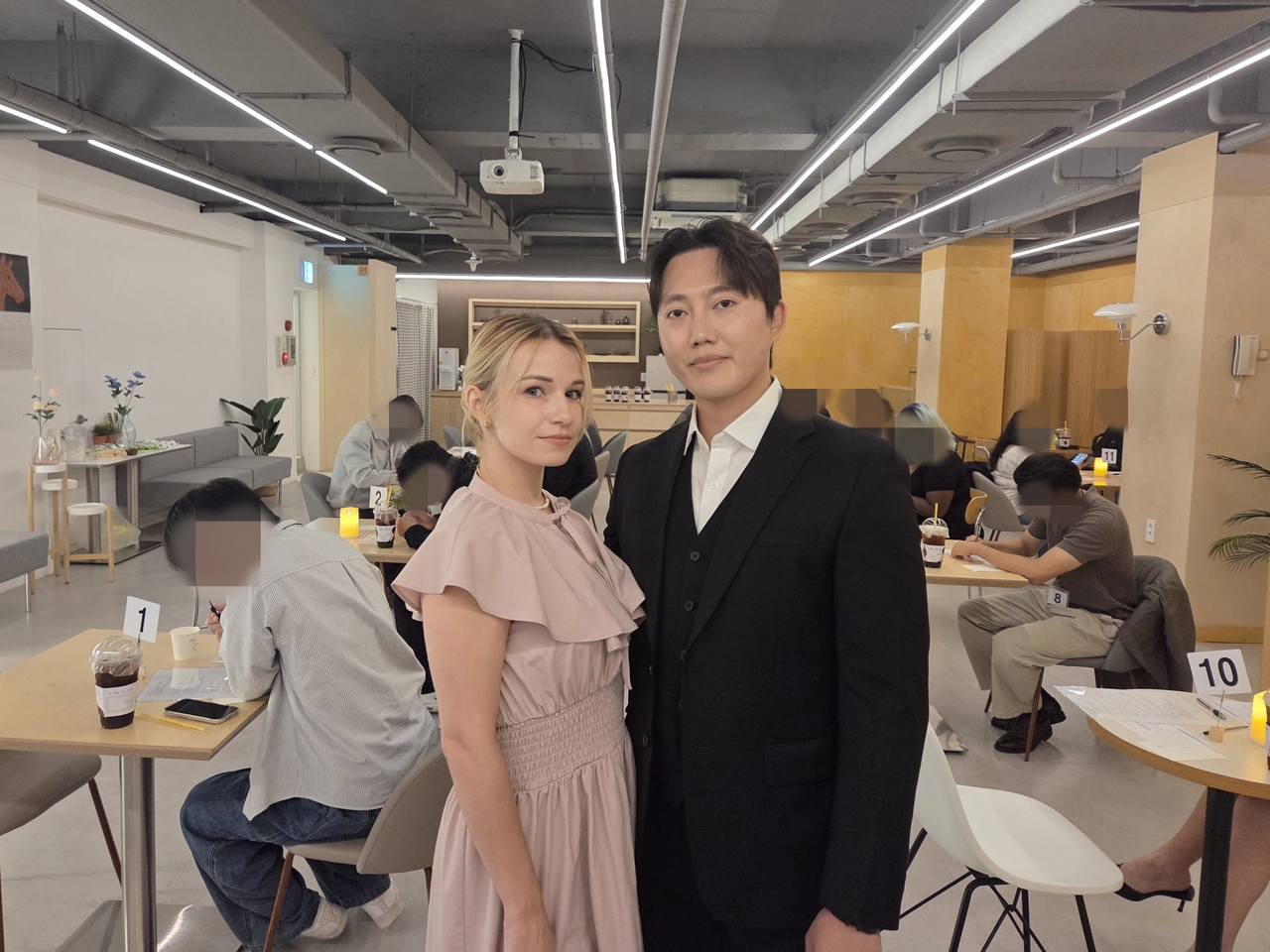
SoloLink was founded in June by Korean fitness trainer Eom Ji-hun, 34, and his Russian wife, Rina Chon, 35. Eom said the first session drew five men and five women. Recent sessions have typically accommodated 13 or 14 participants of each gender, with some events drawing a waiting list.
Several participants said they saw the format as a more deliberate way to meet potential partners than dating apps or clubs.
“From what I’ve seen, most men participate to find a girlfriend or a marriage partner,” Eom said.
“I hope I’m serious and I hope other people are serious,” Nicole added.
For Kang Jung-hoon, who was born in 1986, organized introductions offered a more purposeful alternative to meeting people at clubs, even though he was open to dating foreigners.
“Those encounters are rather casual,” he said. “This is a formal opportunity where friendship could develop into a relationship.”
Beyond stereotypes
Some participants said assumptions about their nationality or race could complicate dating.
Sapphire Harper, 27, an American English teacher who has lived in Korea for nearly four years, said she disliked assumptions that she had come to Korea simply for K-pop or Korean beauty products. She said people had also made racist comments about Black people in front of her and then looked to her for confirmation.
Nicole recalled an ex-boyfriend calling her a tourist, despite her having lived in Korea for four years. She said assumptions about McDonald’s, guns and American personalities could make cultural differences as frustrating as language barriers.
Both said they wanted to be seen as individuals rather than stereotypes.
“I don’t want to be approached just because I’m a foreigner,” Nicole said.
Language and attraction
Language proficiency can affect participants’ choices, Chon said. She observed that women who spoke Korean were selected more often. Kang also hoped to meet someone who spoke some Korean because his English was limited.
Harper, meanwhile, said she worried that some men prioritized Korean proficiency over shared interests.
“I’m OK with building up conversation skills because I’m also learning Korean. The problem is not a lot of people are OK with that,” she said. “They default to whoever speaks the most Korean, even if we have the most in common.”
Distance and future plans
Eom estimated that about 20 percent of female participants were visiting Korea, and said some had attended a session soon after arriving in the country. He said questions about whether women lived in Korea had not stopped men from attending, though their length of stay, distance and work schedules could complicate relationships.
Kang said he was open to a long-distance relationship, believing marriage would eventually bring a couple together. He did not expect to move abroad because of his career prospects, however, and hoped any future partner would settle in Korea.
Harper, who lives in Seoul, was willing to stay in Korea and was open to some distance. Nicole, who lives in Bundang, Gyeonggi Province, said a commute of about an hour was manageable and that she, too, was open to staying in Korea.
shwang9@heraldcorp.com