Surging ESS demand, tighter US tax rules fuel expansion but cost challenges persist
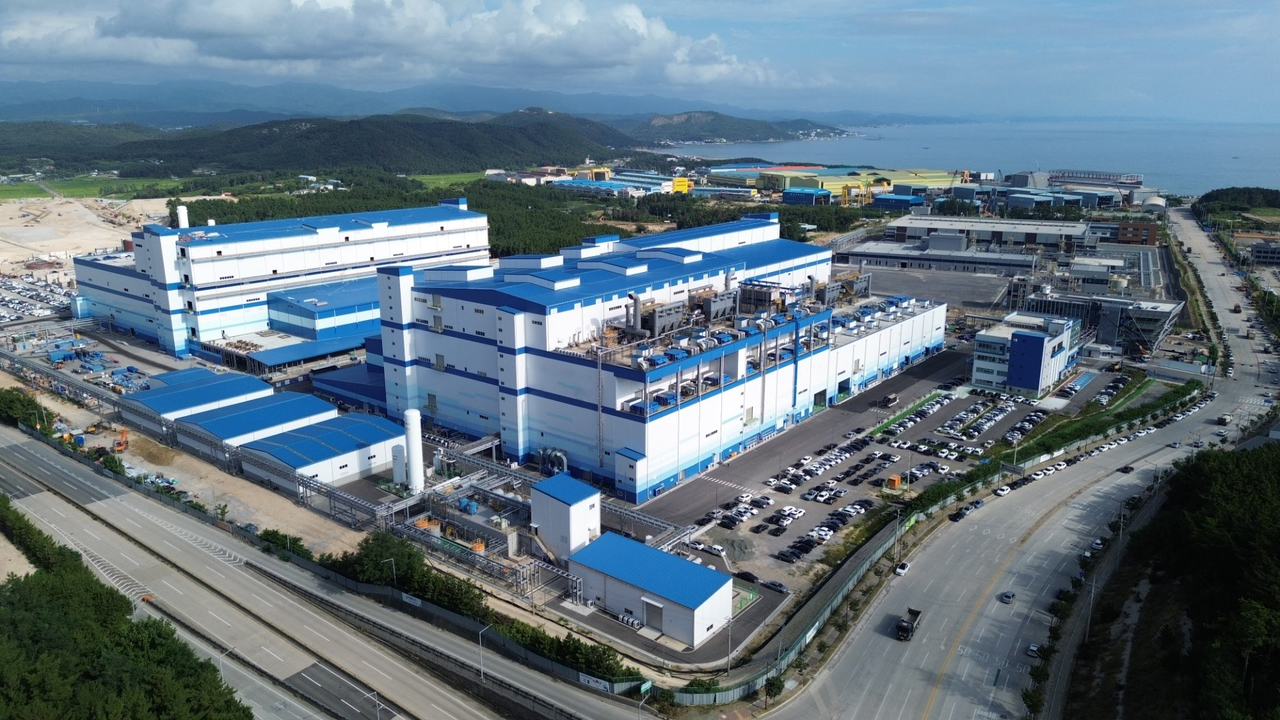
South Korean battery materials makers challenge China’s near-monopoly with a fresh push into lithium iron phosphate cathodes as US restrictions and energy storage demand create an opening for Korean suppliers.
Posco Future M and L&F, long focused on nickel-rich cathodes for electric vehicles, are converting production lines, building dedicated LFP plants, and locking in multitrillion-won supply deals with Korea’s major battery makers.
Behind the shift is a rapid expansion of energy storage systems in the US. LG Energy Solution, Samsung SDI and SK On are ramping up LFP battery production as AI data centers drive electricity demand and increase the need for power storage.
But the bigger catalyst is Washington. Tougher US tax credit rules force battery makers to reduce their reliance on materials linked to what the US calls "prohibited foreign entities," particularly Chinese suppliers. That is creating room for Korean companies in a market China has long dominated on both cost and scale.
“As electricity demand rises with the expansion of AI data centers, demand is also growing for LFP batteries used in ESS applications to ensure a stable power supply,” a battery industry official said.
“Supply agreements with Korean companies are also increasing as battery makers seek to secure non-PFE supply chains.”
LFP push accelerates
Last week, Posco Future M, the battery materials arm of Posco Group, finalized a long-term agreement worth about 6 trillion won ($4.5 billion) to supply LFP cathode active materials to Samsung SDI from 2027 through 2032.
The company said the contracted volume is more than double the 190,000 tons covered by an earlier agreement signed in August.
Weeks earlier, Posco Future M secured a roughly 1.1 trillion won LFP supply deal with SK On for 2027 through 2029, with an option to extend the contract by two years.
To meet growing orders, Posco Future M has converted part of its high-nickel cathode production lines in Pohang, North Gyeongsang Province, to LFP production, with mass production scheduled to begin by year-end.
It is also building a dedicated LFP cathode plant in Pohang with Chinese precursor maker CNGR, targeting production next year and eventual annual capacity of up to 50,000 tons.
The company also plans to use lithium from Posco Group's salt flat operations in Argentina to improve cost competitiveness.
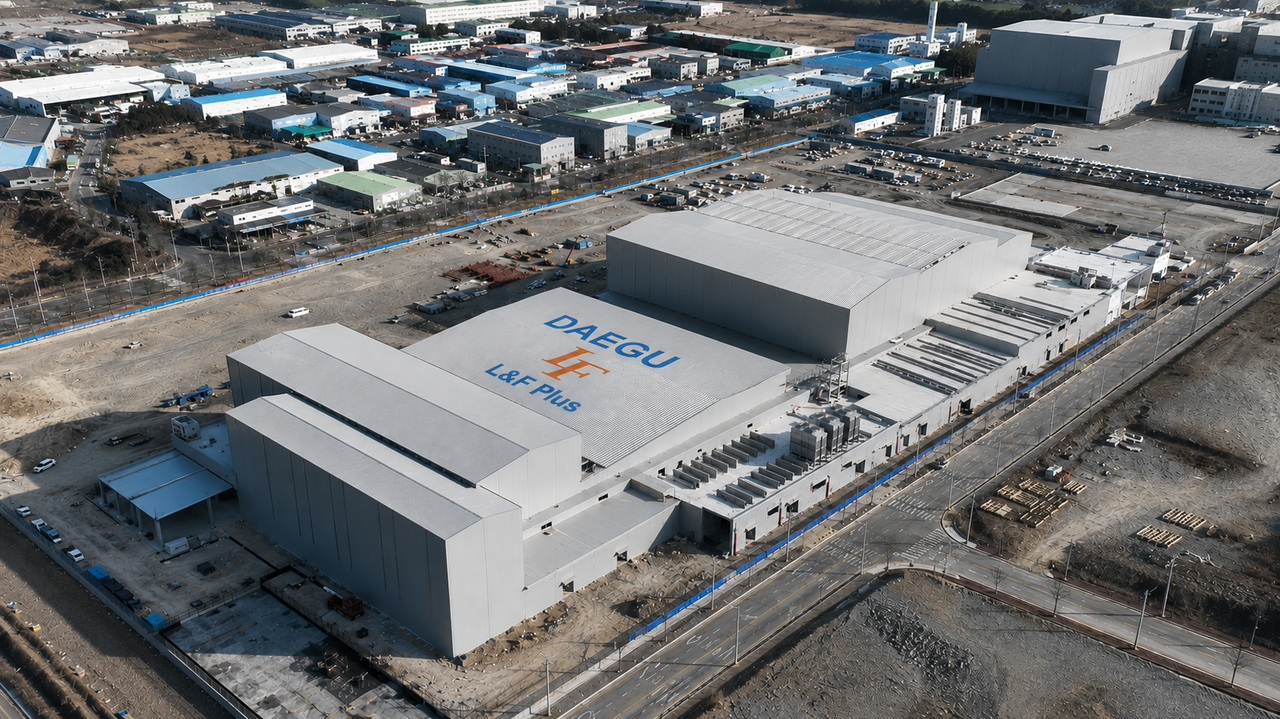
L&F is following a similar path.
The cathode producer signed a roughly 160 billion won LFP supply agreement with SK On last month, after securing a 1.6 trillion won agreement with Samsung SDI in March for three years beginning in 2027.
Samsung SDI said cathode materials from L&F will be used in ESS batteries produced at its joint venture plant with Stellantis in Indiana.
L&F Plus, its LFP-focused subsidiary, opened a dedicated plant in Daegu in May and began shipping trial products in July. Annual production capacity is expected to double from 30,000 to 60,000 tons by mid-next year.
ESS demand fuels expansion
Korean battery makers are turning to ESS as a new growth engine amid a prolonged slowdown in the EV battery market.
South Korea’s battery trio, Samsung SDI, LG Energy Solution and SK On are expanding their North American ESS business, converting existing EV battery production lines and developing facilities capable of producing batteries for both applications.
LFP has become key to that strategy.
LFP batteries are less attractive for premium EVs that prioritize driving range. However, they are cheaper, have longer cycle lives and offer greater thermal stability.
Those advantages make them well suited for large-scale ESS installations, which stabilize electricity supply and manage demand fluctuations. The rapid growth of AI data centers is adding urgency to the need for such systems.
US rules challenge China's dominance
For years, Korean battery materials makers largely avoided LFP because of China's overwhelming cost advantage.
China produces more than 98 percent of the world’s LFP cathode material and battery cells, according to the International Energy Agency. Its dominance reflects years of investment, economies of scale and an integrated supply chain spanning raw material processing, cathode production and battery manufacturing. LFP batteries also power most Chinese EVs.
Korean companies instead concentrated on higher-energy-density nickel-based batteries, where they had greater technological advantages.
But the equation is shifting after the One Big Beautiful Bill Act, enacted in the US last year, introduced new restrictions on materials linked to PFEs.
Under the rules governing Section 45X advanced manufacturing production tax credits, battery components must meet minimum thresholds for the share of direct material costs attributed to non-PFE sources. This means companies that rely too heavily on Chinese or other PFE-linked raw materials risk losing eligibility for the tax credit.
To be eligible, batteries must be produced with materials sourced from non-PFE suppliers for at least 60 percent of their cost in 2026. That threshold rises to 65 percent in 2027 and 70 percent in 2028, then jumps to 80 percent in 2029 and reaches 85 percent from 2030 onward.
For Korean battery makers operating in the US, securing non-PFE supply chains has become critical to receive federal incentives. This shift is driving demand for Korea-made cathode materials, even at a higher price than comparable Chinese products.
“Essentially, restrictions on Chinese goods in the US and Europe are opening a door for Korean companies,” said Kim Pil-soo, an automotive engineering professor at Daelim University. “Customers may choose Korean LFP materials despite the high cost.”
Still, the regulatory advantage does not erase the substantial cost gap with Chinese suppliers.
“Chinese LFP has stronger cost competitiveness, an established materials and components supply chain and much greater manufacturing at scale," said Kim. "China is also ahead on technology, as it produces the batteries that go into EVs."
Kim warned that the current opportunity could be temporary unless Korean companies use it to strengthen their competitiveness.
“This window will not come often,” he said. “Now is the time Korean companies have been given to build competitiveness. If they fail to lower costs, strengthen their supply chains and upgrade technology, even this opportunity could eventually disappear.”
sahn@heraldcorp.com