As Cornell case sparks a wave of women sharing their experiences of sexual violence online, KPRC 2 reporter Jung Jae-won finds voice after years of silence and shame
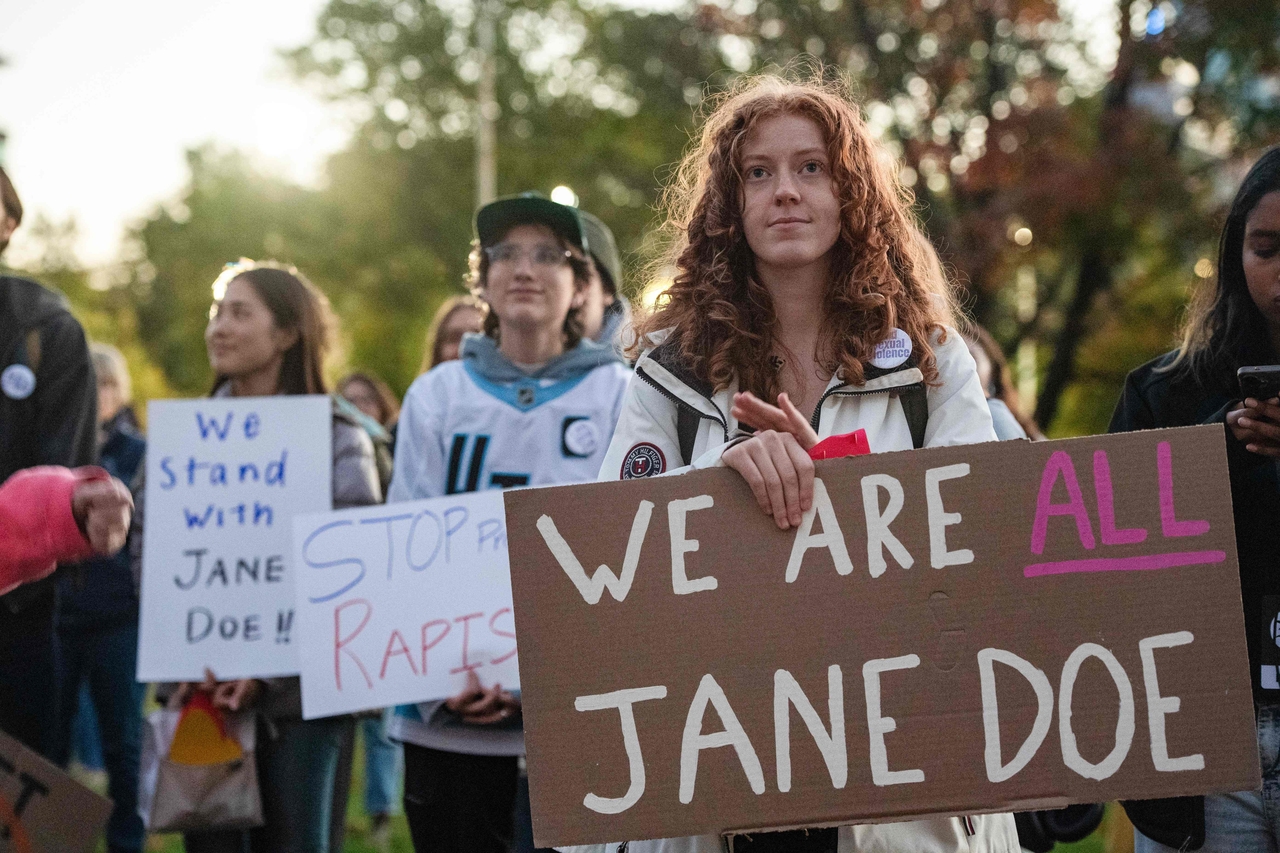
“I am Jane Doe.”
The three words have become a rallying cry across social media, as women share their own experiences of sexual assault in the wake of a high-profile gang-rape case involving Cornell University students.
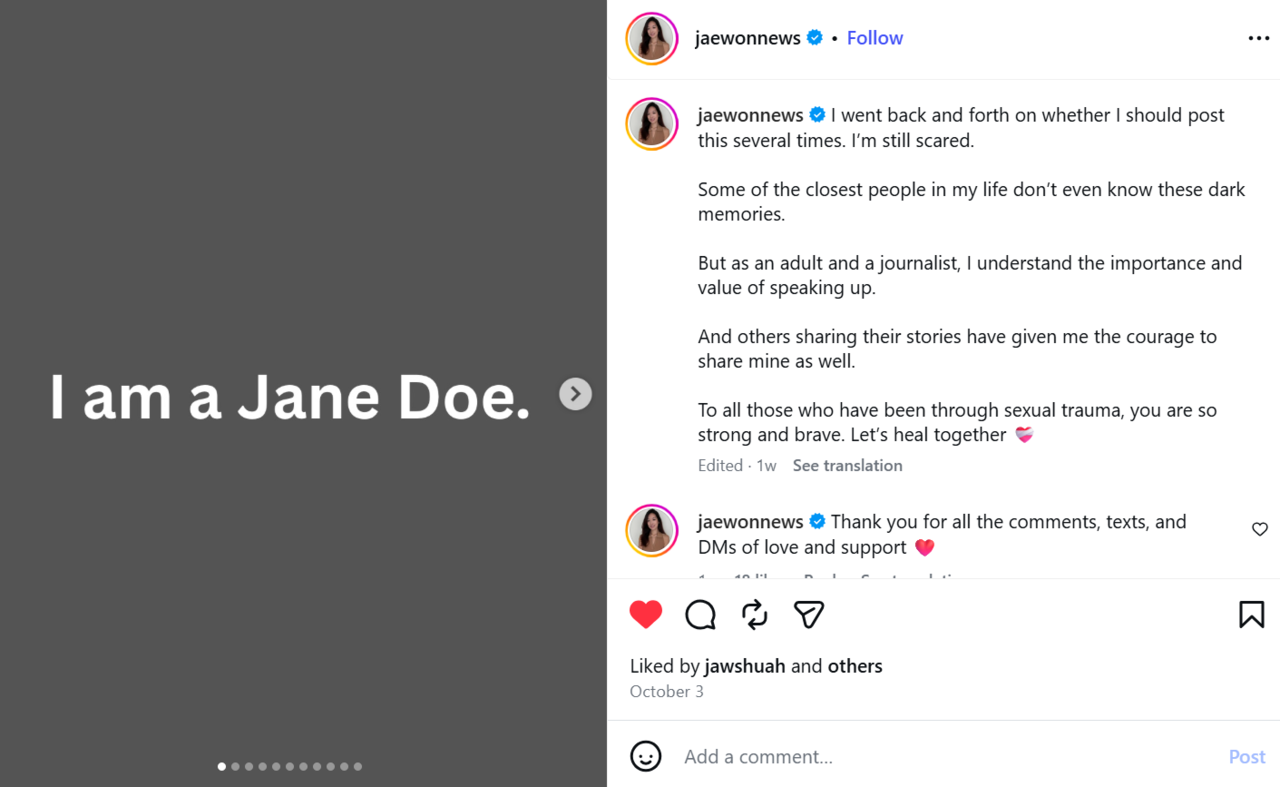
One of the women is Jung Jae-won, a Korean American television reporter at KPRC 2, an NBC-affiliated television station in Houston, Texas. She has spoken publicly about an alleged sexual assault she says she endured in South Korea in 2017, hoping to help other women feel less alone.
In a recent Instagram post titled “I am a Jane Doe,” Jung alleged that a man raped her in Busan, South Korea, while she was heavily intoxicated. She said he repeatedly bought her drinks before taking her to a motel, where he allegedly raped her despite her repeatedly saying no. She did not report the incident to police at the time, she said, because she was far from home and too frightened to come forward.
In an interview with The Korea Herald,, Jung said that speaking out meant confronting years of shame while encouraging other women to do the same.
"For years, I carried so much shame about what happened to me. Even moments before I pressed the button to share my story, I questioned whether I was making the right decision. I worried about how people would perceive me, whether they would believe me, and whether sharing something so personal would change the way people saw me," she said.
"If sharing my experience helps even one woman feel less ashamed, less isolated, or more comfortable with her own healing journey, then I believe it was worth it."
In the Cornell case, a former student, identified as Jane Doe to protect her identity, has accused seven current and former Cornell students of gang-raping her at the Chi Phi fraternity house in October 2024, according to The Cornell Daily Sun.
The woman, who was 20 at the time, alleges she was pressured into consuming alcohol, marijuana and ketamine, leaving her unable to resist or make sound judgments.
None of the seven defendants has been criminally charged, but New York authorities have reopened the investigation and plan to present the case to a grand jury. One of the defendants is a student surnamed Lee, who is believed to be Korean.
Jung, a two-time Pacific Southwest Emmy Award winner, said her decision to speak out was not intended to pass judgment on those accused in the Cornell case.
“As a journalist, I strongly believe in due process and the presumption of innocence. Those accused deserve a fair legal process, and allegations should not be treated as proven facts,” she said.
“I decided to speak out not to weigh in on anyone’s guilt or innocence, but to share my own experience and hopefully help others who may have gone through something similar feel less alone.”

#MeToo echoes across Korean online communities
The "I'm Jane Doe" movement has also reached some Korean online communities, where users have expressed solidarity with the alleged victim through the #MeToo hashtag.
The campaign gained prominence in Korea in 2018 after prosecutor Seo Ji-hyun publicly accused a senior colleague of sexual harassment, triggering a wave of revelations across politics, entertainment and the arts.
The renewed use of the hashtag appears to be linked to reports of the defendant's Korean background.
"It's outrageous that people are digging into the identity of the woman in the Cornell case and acting like she did something wrong just by being there. We saw the same thing during #MeToo. People still find ways to blame women for what happened to them. I can't imagine how many women are out there blaming themselves and staying silent," one user wrote on X.
cjh@heraldcorp.com