 Hong Yoo
Style, Eat, Travel
Certified seafood remains rare in Korea, but Conrad is committed to sourcing environmentally responsible ingredients
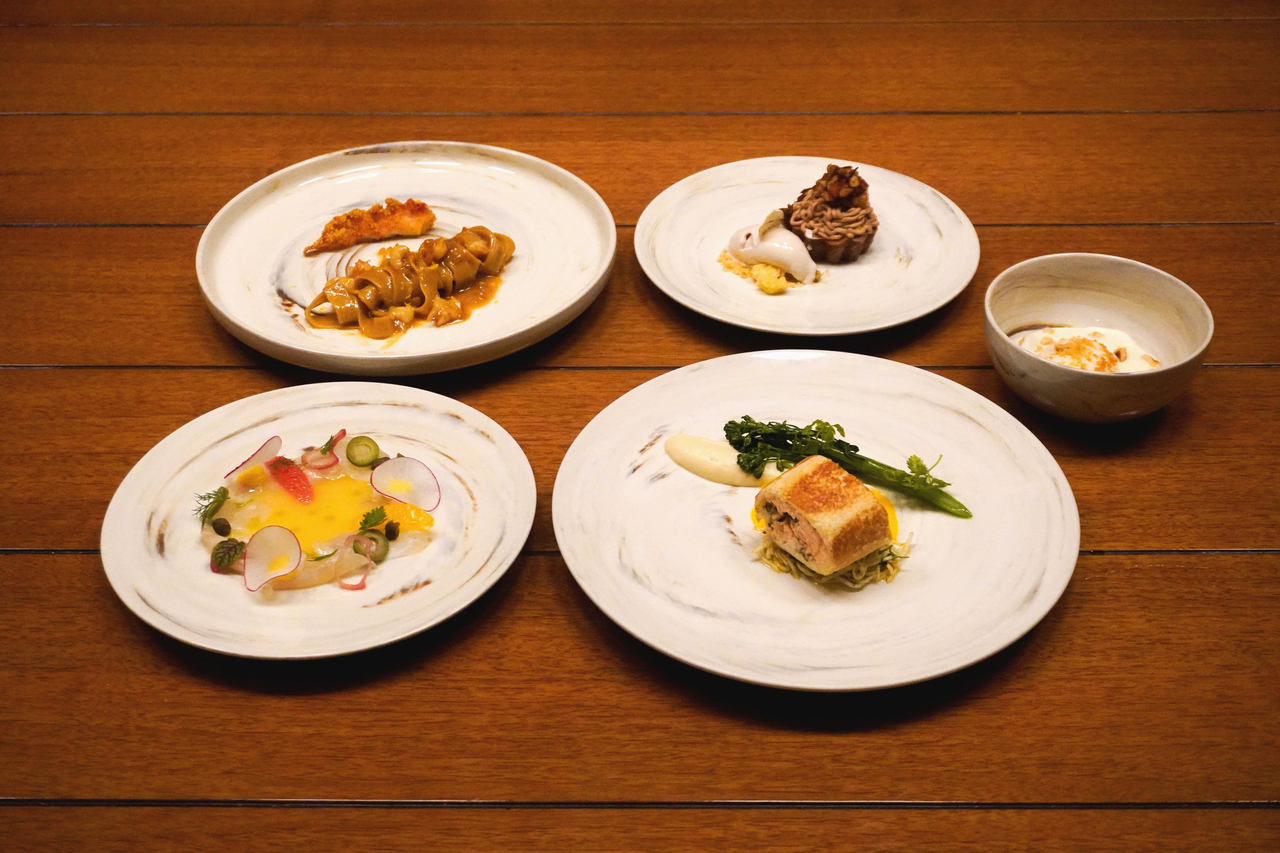
The first course was a crudo of olive flounder, sliced thin and dressed with citrus segments, pink peppercorns and a green herb oil. Flatfish is one of the most commonly eaten fish in Korea and a fixture of raw fish restaurants across the country.
This one came from a farm in Jeonnam-Gwangju certified by the Aquaculture Stewardship Council, which is still unusual in the Korean market.
Conrad Seoul served the dish at a luncheon for a small group of food journalists, titled "Today's Meal, a Choice for Tomorrow." The five-course menu is not offered to guests. The hotel put it together to show how sustainable sourcing works in its restaurants day to day.
Each course centered on one of those ingredients. They included ASC-certified farmed seafood, wild seafood certified by the Marine Stewardship Council, cage-free eggs and a plant-based dessert. The hotel says it is the first in Korea to bring ASC-certified flatfish into its kitchens.
The two certifications cover different sides of the seafood industry. The ASC, an independent nonprofit founded in 2010 by the WWF and the Dutch Sustainable Trade Initiative, certifies farmed fish and shellfish. Farms are assessed on their environmental impact, including water quality, feed and disease management, as well as on working conditions.
The MSC, founded in 1997 by the WWF and Unilever, sets the standard for wild-caught seafood. Certified fisheries must show that fish stocks are healthy, that their effect on the wider marine ecosystem is limited and that they are well managed.
Seafood sold under either label must be traceable through a certified supply chain.
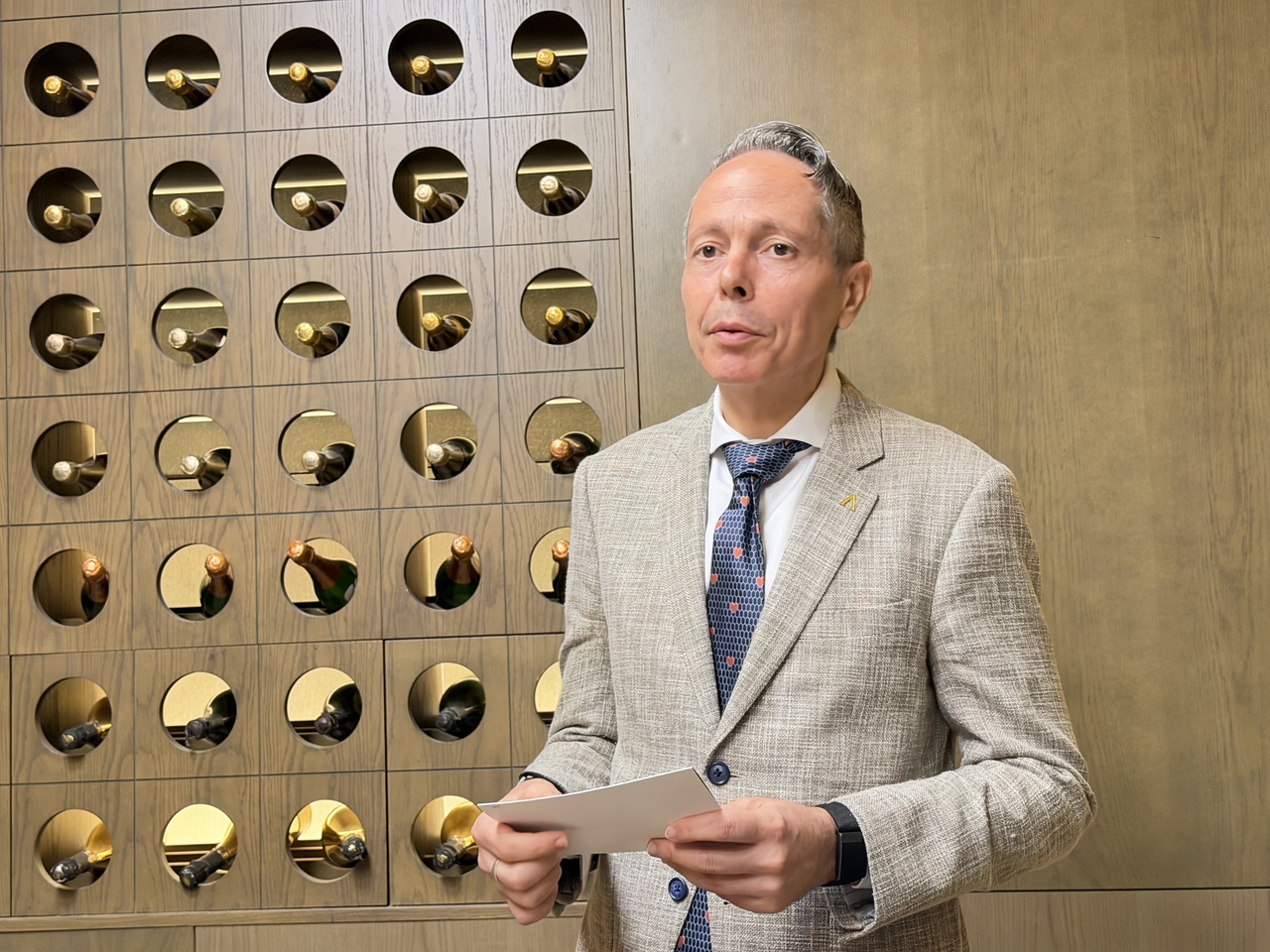
"For us, sustainability goes beyond simply being environmentally friendly. It's also about the ingredients we choose, where they come from, how they are prepared and served, and how we respect different dietary preferences and lifestyles," said Gabriele D'Amore, the hotel manager.
A supply problem
Certified seafood is not hard to justify, but it is hard to find, according to Matthew Jeon, the hotel's director of marketing communications.
Most seafood eaten in Korea could in principle be certified, he said. Few producers have pursued certification because buyers have not asked for it.
"There is no demand for certified seafood, so there is no supply," Jeon said.
For ASC-certified fish, that means every distributor that handles the product must be certified, not just the farm. Jeon said Korea has only one certified domestic flatfish farm. Adding producers means visiting farms, persuading them to apply and then finding certified businesses to handle and distribute the product, a process that can take months.
The hotel wanted to introduce certified flatfish earlier, Jeon said. It had to wait until a certified distributor opened at Noryangjin Fisheries Wholesale Market in Seoul.
Much of the hotel's other certified seafood, including salmon and lobster, is imported. Among domestic products used in Conrad Seoul is ASC-certified abalone from Wando, Jeonnam-Gwangju.
According to the hotel, about 50 percent of the seafood used across Conrad Seoul is now certified. Its lobster and snow crab are 100 percent certified. Salmon sits at around 50 percent because certified supply is not stable enough to guarantee consistent quality.
Asked whether certified fish tastes different, Jeon said feed and water treatment systems vary from farm to farm. There is no objective way to measure the effect on flavor, he said, and an ordinary palate would have difficulty telling the difference.
The hotel received MSC chain-of-custody certification in 2021, the first company in Korea's hotel and food service industry to do so, according to the hotel.
From cage-free eggs to certified seafood
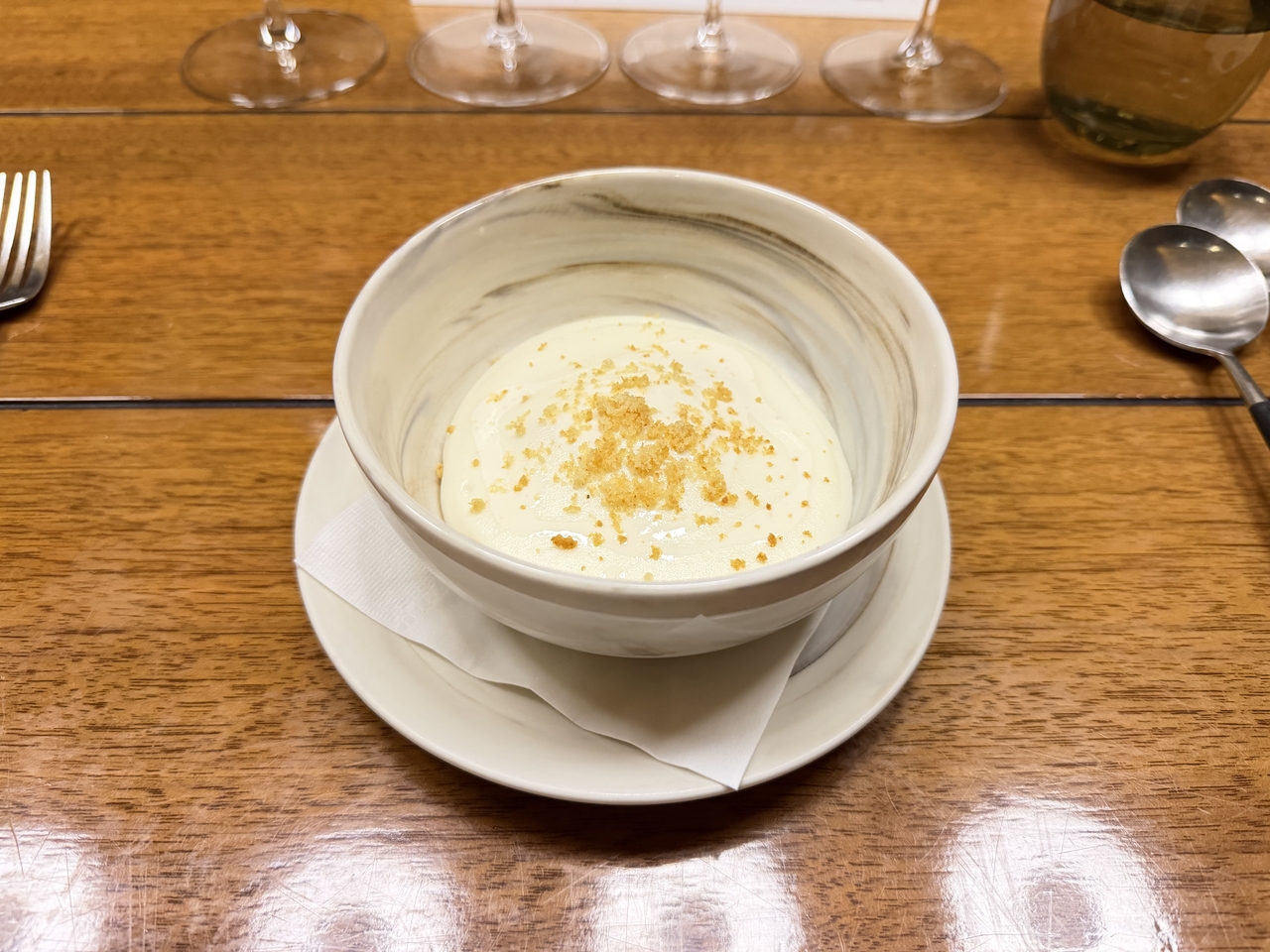
The second course was a sous-vide cage-free egg with smoked potato foam, Parmesan and hazelnut crumble.
Conrad Seoul uses cage-free eggs at all of its food and beverage outlets, Jeon said. Many restaurants that advertise cage-free eggs apply the policy only to whole shell eggs, he said. The hotel has extended it to the liquid egg products used in its kitchens.
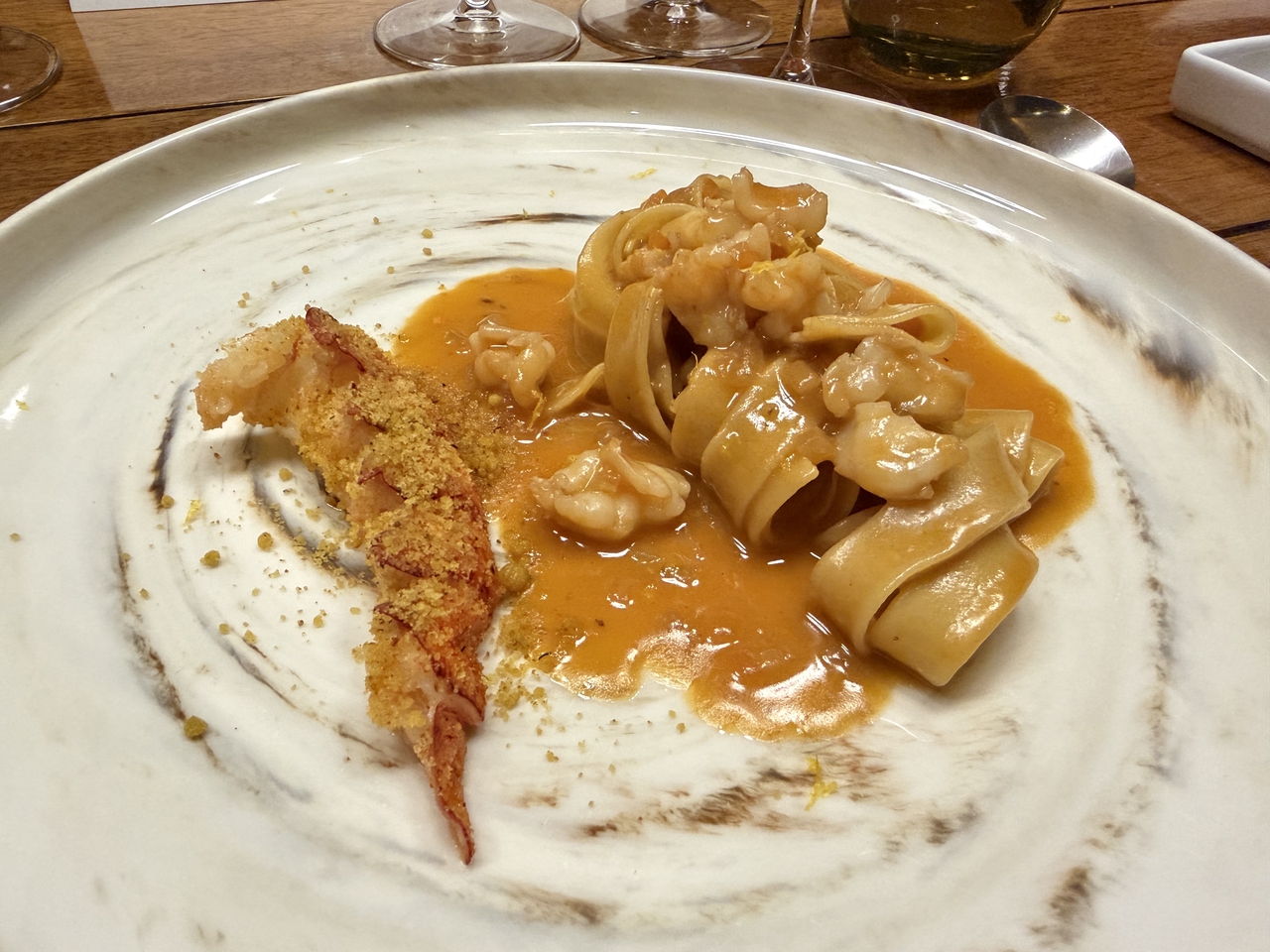
Next came handmade fettuccine with a ragu of ASC-certified shrimp, MSC-certified lobster and a bisque butter sauce finished with lemon zest. The main course was applewood-smoked ASC-certified Norwegian salmon with celeriac puree and saffron cream sauce.
"For our F&B team, sustainability is something we want to apply in everyday use, not only for a certain promotion or a single menu. At the same time, we believe sustainability should never come at the expense of taste, quality or guest satisfaction," said Georges Saade, director of food and beverage.
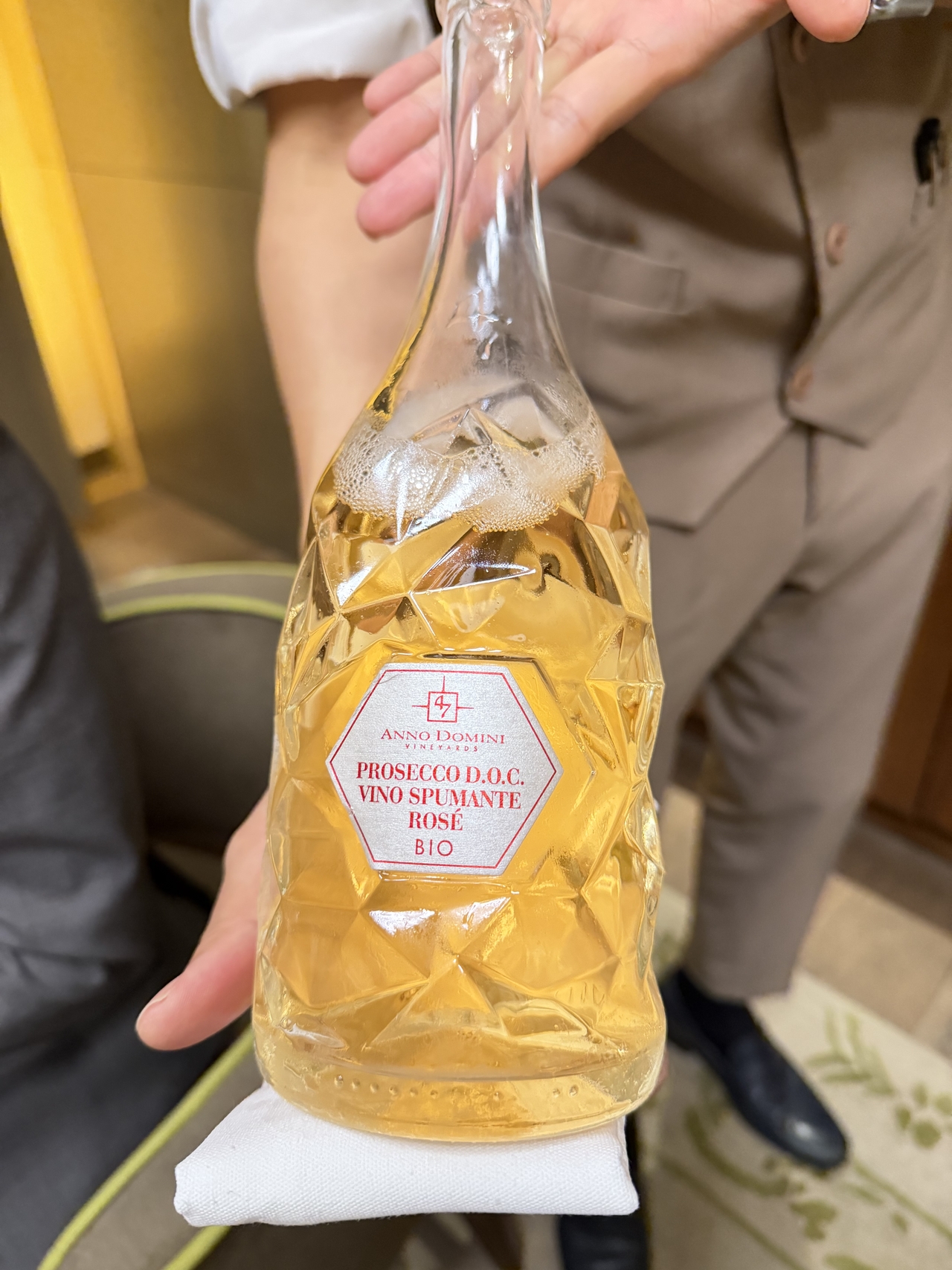
Each course came with a wine pairing. The first was an organic, vegan rose prosecco from Veneto, Italy, and the last was a 2020 Amarone della Valpolicella Classico.
The hotel's wine list has drawn its own recognition. The Butcher's Edge, the hotel's grill restaurant on the 37th floor, received a silver star in the Sustainable Wine List of the Year Asia category of the 2025 Star Wine List awards. It was the only Korean restaurant recognized in the category, which assesses practices from viticulture and winemaking to packaging and transport.
The hotel's approach is tied to Travel with Purpose, the global sustainability strategy of parent company Hilton. The strategy covers responsible sourcing and food waste reduction.
A vegan finish
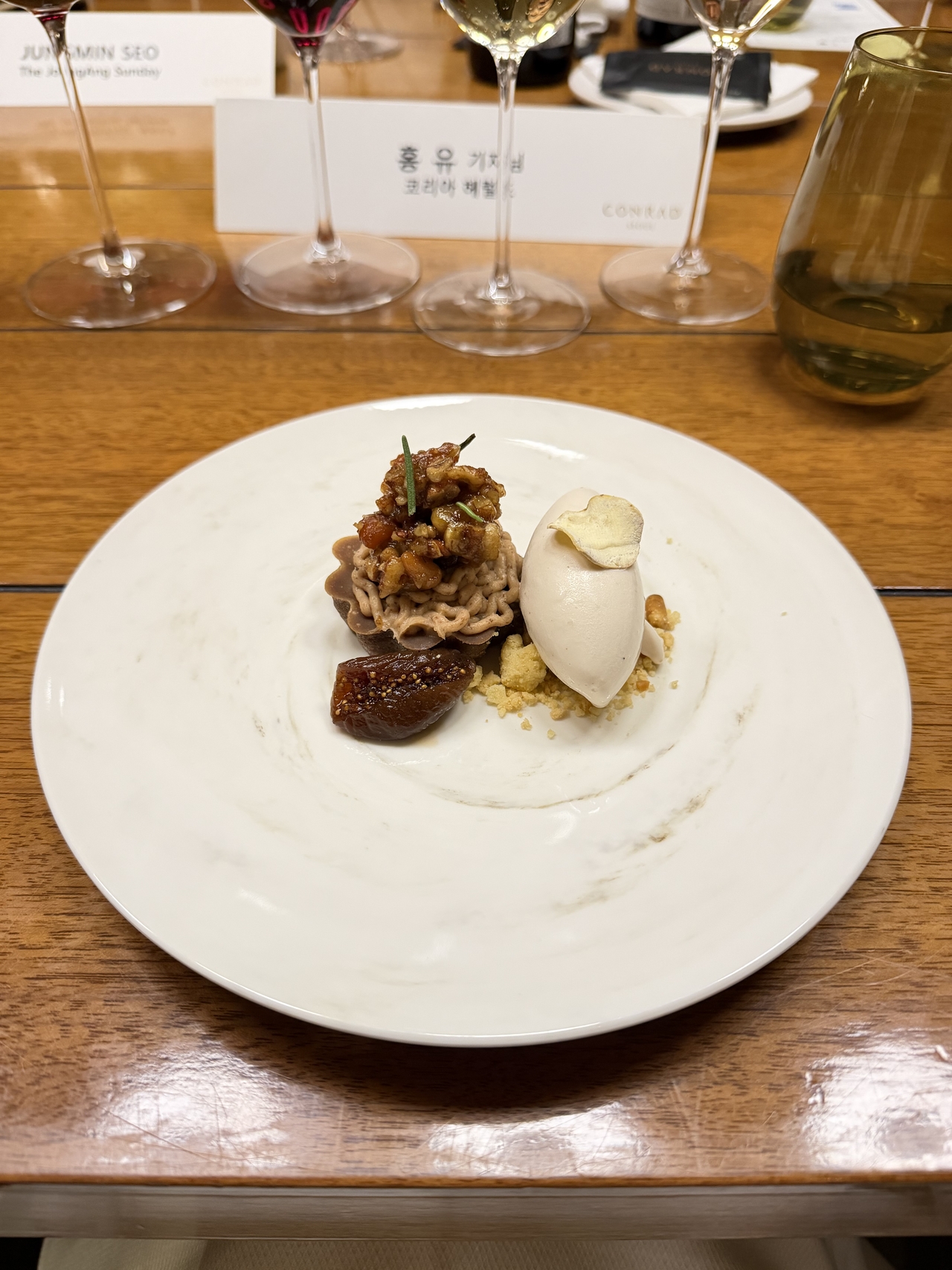
The meal closed with a vegan chestnut torta topped with chestnut cream and chestnut gelato, served with fig compote and pine nut crumble.
D'Amore follows a vegan diet himself. He said the hotel sees vegan eating not as an exception but as another part of sustainable dining.
"I hope today's lunch shows that sustainability does not need to feel restrictive or complicated, and that it can still be generous, enjoyable and, above all, delicious," he said.
yoohong@heraldcorp.com
- Try Gunsan's signature spicy noodles at jjamppong festival
- Inside Conrad Seoul's push for sustainable dining
- 29CM turns 18th-century sijo anthology into home goods for Hangeul Day centennial
-
British man arrested 9 days after fleeing Korea following stabbing
x
-
Ceiling collapse at Daegu building injures 38
x
-
Just married! at Gyeongbokgung
x