 Hwang Dong-hee
Books Performance Heritage
Hangeul now reaches some 82 million people worldwide. More than 130 years ago, Hulbert recognized what made it remarkable
Today, Korean folk song Arirang is recognizable to audiences all around the world. Its familiar melody has found new life through contemporary artists, including BTS, conveying a centuries-old Korean tradition to a new generation of listeners.
More than a century before the song became part of the global K-pop repertoire, a young American heard it in the streets of late-19th-century Korea and stopped to listen.
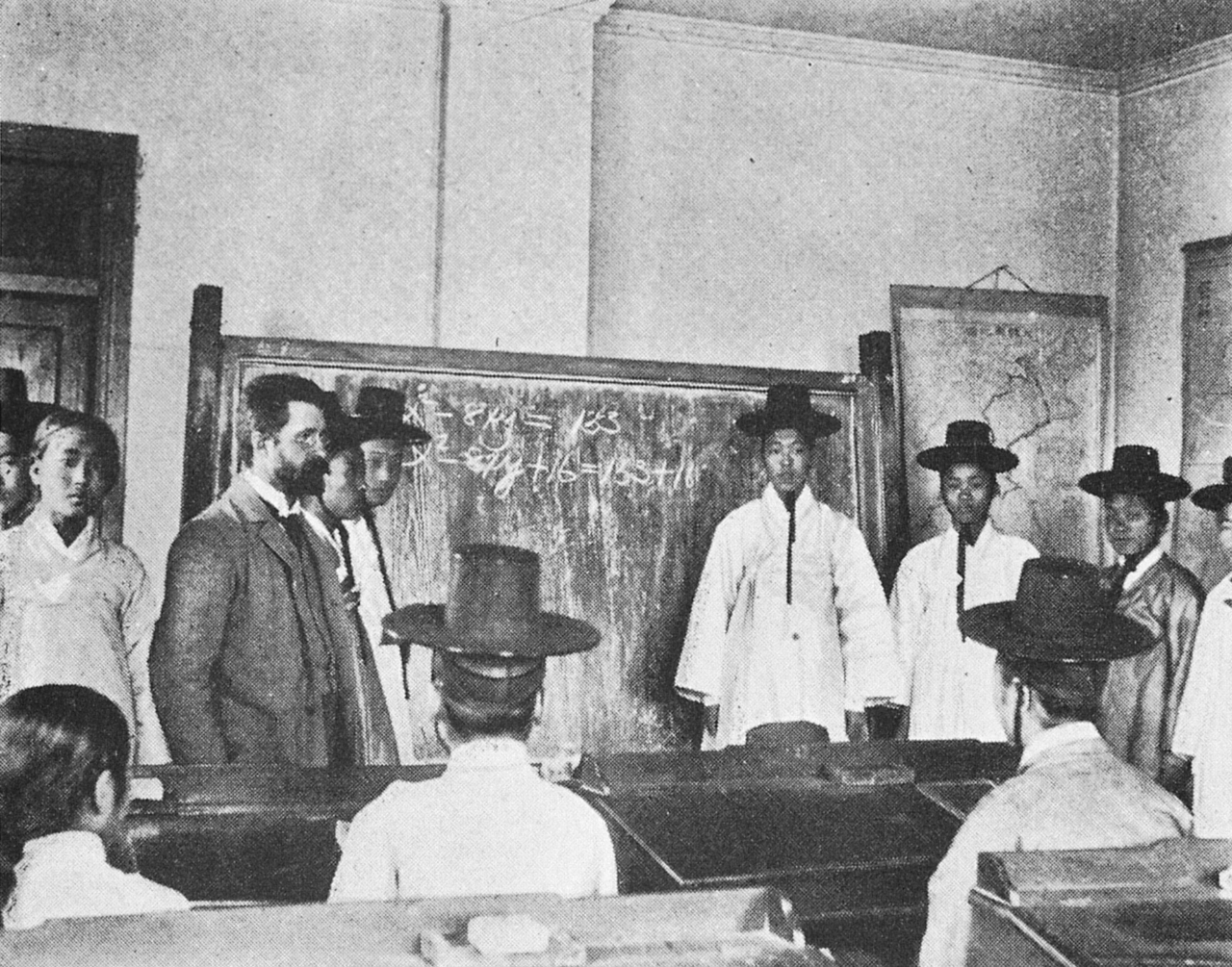
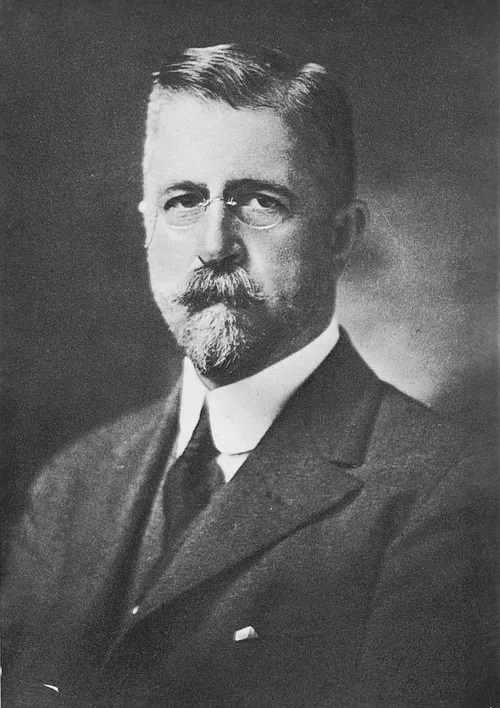
When Homer B. Hulbert arrived in Korea in 1886 at age 23, he came as one of three American teachers recruited to teach at Yukyeonggongwon (Royal College), the Joseon government’s first modern school. Soon after his arrival, he heard children singing Arirang. In October that year, he transcribed its melody in Western musical notation and sent the score to his younger sister.
The early encounter was a sign of things to come.
During his years in Korea, Hulbert became far more than a teacher. He studied the Korean language, wrote one of the country’s earliest modern textbooks in Hangeul, researched the Korean alphabet and documented Korean folk music.
He also became deeply involved in Korea's struggle for independence, supporting Emperor Gojong's efforts to appeal to the international community and later assisting Korean envoys at the Second Hague Peace Conference in 1907.
But his enduring legacy may lie in something more fundamental: his early recognition of the power of Korea’s writing system.
Ahead of its time
Hulbert had come to Korea to teach, but he soon found that teaching required something more: books.
Yukyeonggongwon initially focused on English but soon expanded its curriculum to include subjects such as geography and mathematics. Hulbert wanted his students to have access to the broad range of knowledge being taught in the West.
Within two years of arriving in Korea, he had learned enough Korean to write. Three years later, he took on the more ambitious challenge of writing the first modern textbook in Korean.
The result was Samin Pilji, published in 1891. Written entirely in Hangeul, the roughly 170-page book introduced Korean readers to the wider world, covering subjects from government and industry to education, religion and military affairs. Its title, roughly translated as “Knowledge Necessary for All,” reflected Hulbert’s belief that knowledge should be accessible beyond social class.
The book included nine maps, with rivers and other geographic features marked in color. Hulbert also adapted measurements and terminology for Korean readers, using traditional units such as "ri" and "cheok" for distance and length, respectively, and expressing currency in won rather than dollars.
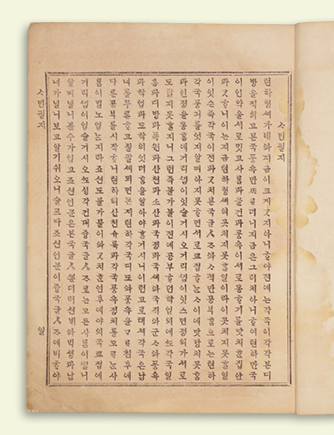
But the choice of script was as important as the information itself.
In the preface, Hulbert wrote in Korean, “Hangeul is far more convenient than Chinese characters, yet it is deeply regrettable that people do not recognize this and instead look down upon it. For this reason, although I am but a foolish foreigner unfamiliar with the Korean language and Hangeul, I will put aside my reservations and use Hangeul to record, however briefly, the geography of countries around the world and the customs I have seen and heard about.”
“(Hulbert) recognized the value of Hangeul at a time when Chinese characters were still widely used, and, as a foreigner, chose to write an entire book in Hangeul,” said Kim Seo-young, a curator at the National Hangeul Museum. “That alone is remarkable.”
"He also took care to make the material accessible to Korean readers, using words and expressions familiar to them. That attention to his readers reflects how thoughtfully Hulbert approached his Korean audience."
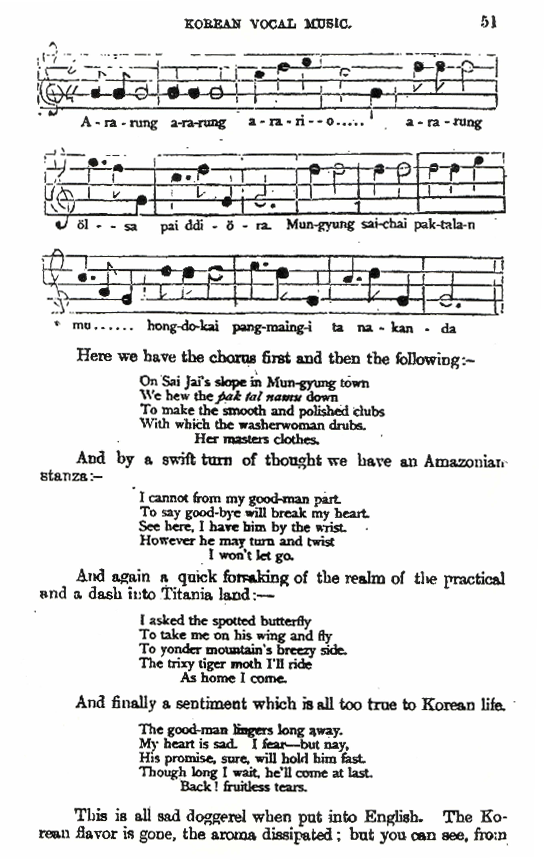
His interest in Hangeul soon developed into more serious linguistic research.
In 1889, Hulbert wrote “The Korean Language” for the New York Tribune, introducing Korean and its writing system to an English-speaking audience. In 1892, he published “The Korean Alphabet,” an early scholarly study of Hangeul’s origins and structure, as well as the achievements of King Sejong, who is credited with the alphabet's creation in the 15th century.
He was particularly struck by the way Hangeul represented individual sounds with its own letters.
“Korea has a true alphabet, each articulate sound being expressed by means of its own letter,” he wrote, emphasizing how different Hangeul was from the writing systems of Korea’s neighbors, noting that it was “radically different” from both Japanese and Chinese writing.
Hulbert made the case that Koreans should make greater use of Hangeul rather than relying heavily on Chinese characters. He also proposed changes to make the writing system more practical, including the use of spacing and punctuation and the removal of the obsolete vowel letter "arae-a."
Hangeul’s reach, then and now
More than a century after Hulbert first heard Arirang, the folk tune has traveled far beyond the peninsula. Hangeul, too, has become increasingly visible around the world, carried by Korean literature, film, television and K-pop.
The scale of that reach would have been difficult to imagine in Hulbert’s time. Korean is now spoken by roughly 82 million people worldwide, ranking 28th among the world’s languages in 2025, according to the National Hangeul Museum.
The King Sejong Institute Foundation, meanwhile, operates 252 institutes in 87 countries, offering Korean-language and cultural education to learners around the world. The number is expected to expand to 350 institutes by 2030.
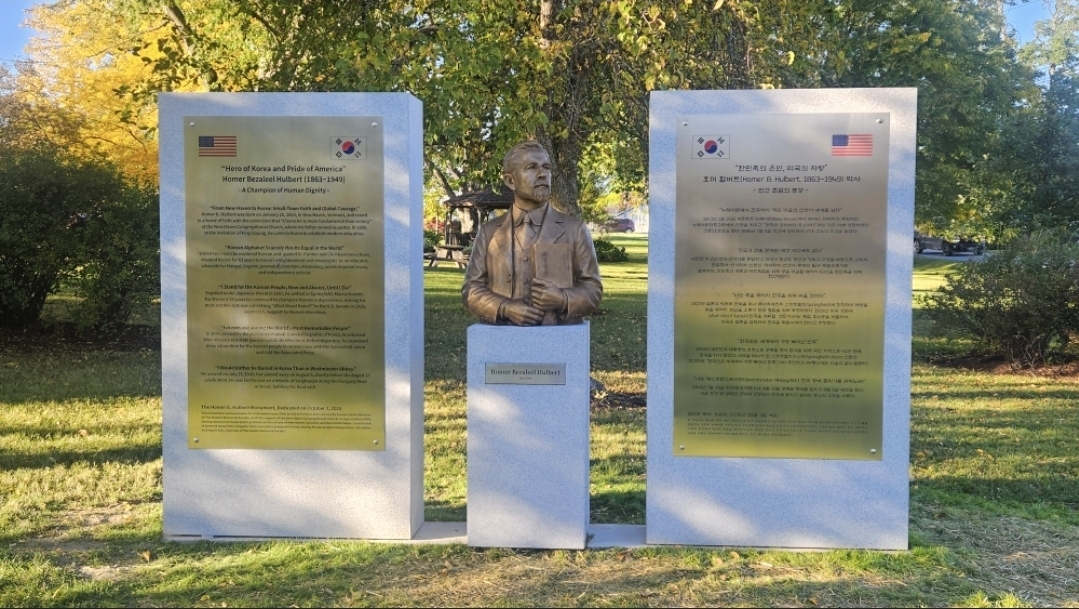
For Kim Dong-jin, chairperson of the Hulbert Memorial Society, the growing global interest in Hangeul makes Hulbert’s early recognition of its value all the more significant.
“Hulbert was a true pioneer in recognizing the power of the Korean language and Hangeul,” Kim said.
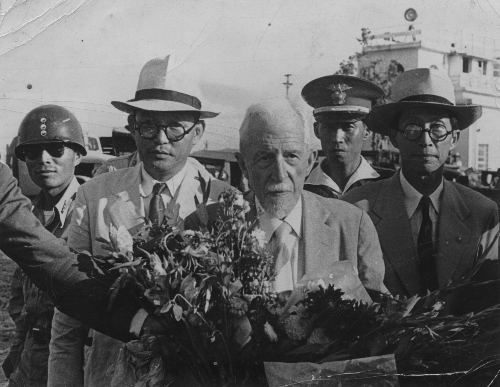
Although Hangeul was proclaimed as Korea’s writing system in 1446, the literati of the Joseon era did not adopt it as the country’s official language.
"Hulbert did more than recognize the merits of Hangeul. He was among the first to introduce its value to the wider world and to urge Koreans to make greater use of it, calling it an 'immeasurable blessing,'" Kim said.
Hulbert believed Hangeul could help break down social barriers and that a country could advance only when its people had access to knowledge and education, continued Kim. He repeatedly argued that Koreans had a strong capacity for learning and that, with broader access to education through Hangeul, Korea could one day become a leading nation.
"He was the person who awakened Hangeul from its long sleep," Kim said.
hwangdh@heraldcorp.com
- The American who saw the power of Hangeul before the world did
- Ancient Greek myths, rewritten for a world in crisis
- Real-life couple to share the stage for the first time
-
Lee puts CPTPP application on hold
x
-
South Korea recalls envoy to Ukraine amid growing friction
x
-
S. Korea adds 180 schools despite losing 510,000 students over 6 yrs: data
x